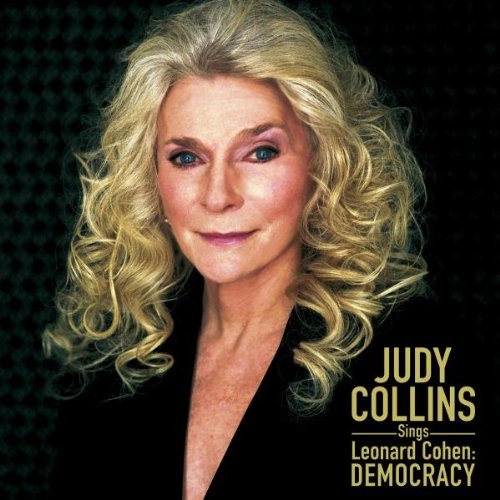
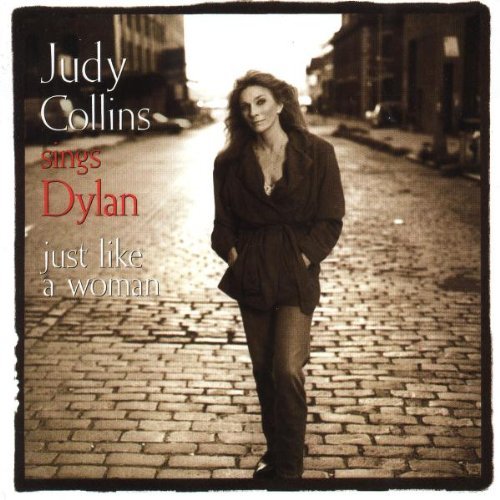
KW-19-2016: 75 JAHRE BOB DYLAN – 75 Beiträge zu Dylans 75. Geburtstag – (61/75 – DYLAN, COHEN & Die SCHNEIDER – Helen Schneider zollte mit ihrem Album „Like A Woman“ Dylan & Cohen gleichzeitig Tribut – Performances, in Concert, Music & Poetry, Anecdotes & Infos. the neverending & everlasting comparison. COHEN & DYLAN – Some critical analysises – by Christof Graf

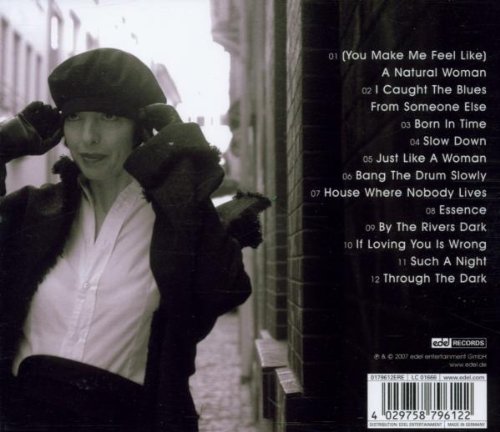
LC-Helen-Schneider-Like-A-Woman-sings-Cohen-and-Dylan

Nach ausgedehnten Ausflügen in die etwas ernsthaftere musikalische Welt ist die New Yorker Sängerin jetzt, wie sie sagt, „wieder am Anfang des Kreises angelangt“. Sie nahm ein Album mit klassischen Pop- und Rocksongs auf und knüpfte damit ansatzweise dort an, wo sie vor 20 Jahren ihre Karriere als Popsängerin abgebrochen hatte, obwohl sie mit Hits wie „Rock’n‘ Roll Gypsy“ Top Ten Erfolge verzeichnen konnte.


„Viele Leute fragen mich: „Wie kannst du erst Charles Ives Songs und Brecht/Weill Material aufnehmen und dann Popsongs?“ Für mich ist die Reise klar. Ich musste lange Zeit durch sehr komplizierte Labyrinthe reisen, um zu der jetzigen emotionalen Einfachheit zu gelangen. Gerade durch die Arbeit mit Charles Ives Material wurde mir klar, dass Einfachheit genial sein kann. Ich lernte sie wieder schätzen. Mir kommt es vor allem darauf an, dass ich mit diesen Songs eine Geschichte ganz neu erzähle. Dass ich sie mit meinem Leben und meinen Emotionen fülle und dadurch vielleicht anderen Menschen Zugang zu ihren eigenen Gefühlen verschaffe“. Das ist ihr gelungen.


Das Resultat: Das Album „Like A Woman“, mit einigen der schönsten Kompositionen aus der Feder der renommiertesten internationalen Songschreiber, so facettenreich, sensibel, intim und gleichzeitig intelligent interpretiert, wie es nur einer Sängerin mit so reicher Berufserfahrung gelingen kann, wie Helen Schneider sie hinter sich hat. Es sind Klassiker wie „Born In Time“ und „Just Like A Woman“ (Bob Dylan), „Natural Woman“ (Carole King), „If Loving You Is Wrong“ (Homer Banks, Carl Mittchell Hampton, Raymond Earl Jackson) sowie weitere Titel von u.a. Tom Waits, Emmylou Harris und Leonard Cohen zu hören.


„Ich habe viele musikalische Leben gelebt“, sagt sie. Und das unterstreicht sie mit diesem Album.


KW-19-2016: 75 JAHRE BOB DYLAN – 75 Beiträge zu Dylans 75. Geburtstag – (60/75 – DYLAN, COHEN & COHEN TALKING ON DYLAN again in 1984 – Performances, in Concert, Music & Poetry, Anecdotes & Infos. the neverending & everlasting comparison. COHEN & DYLAN – Some critical analysises – by Christof Graf

LEONARD COHEN :

I never think of myself as a solitary poet. I don’t feel any conflicts in what I do. There are economic pressures, and there’s a desire too, as a musician would say, to “ keep your chops up, “ to keep singing and keep playing, just because that’s the thing you know how to do. So between that and the need to make a living, you find yourself putting a tour together. What the real high calling behind any life is is very difficult for me to determine. It goes all the way from thinking that nothing any of us do is terribly important to feeling that every person has a divine spark and is here to fulfil a special mission. So between those two positions, there’s lots of space. But I’ve put out a record and I know I have to go on a tour or nobody will know about the record and if nobody knows about the record, it defeats the idea of the song moving from lip to lip, and it also makes it impossible for me to support my family. So all these things conspire to place me on a stage and hopefully be able to entertain people for an evening.


INT: It strikes me that there’s sometimes more irony in your songs than in your poems. I’m thinking of lines like “ He was just some Joseph looking for a manger. “ The inflections in your si ngi.ng voice convey a variety of different attitudes, and in some instances an attitude like irony comes through more clearly in the songs.


LC: Yeah, I see what you mean. I think of Bob Dylan, who gets the inflections of street talk, the inflections of conversation, and does that with such mastery … where you can hear a little tough guy talking. You can hear somebody praying. You can hear somebody asking. You can hear somebody coming onto you. When you’re composing that material and you know that it’s going to occupy aural space, you can compose it with those inflections in mind. And of course it does invite irony because that irony can be conveyed with the voice alone whereas on the page you generally have to have a larger construction around the irony for it to come through. You can’t just write, “ What’s it to ya? “ If you sing, “ What’s it to ya? “ to some nice chords it really does sound like, “ Well, what’s it to yah, baby? “ But.just to see it written, it would need a location.


Leonard Cohen as interviewed by Robert Sward

That interview took place in Montreal, Quebec – 1984.


INT: How much connection do you feel with Dylan’s music, or with others, like Joni Mitchell, for example? Whose music is closest to you now…?


LC: Well, like the Talmud says, there’s good wine in every generation. We have a particular feeling for the music of our own generation and usually the songs we courted to are the songs that stay with us all our life as being the heavy ones. The singers of my own period, Joni Mitchell, Bob Dylan, Joan Baez, Ray Charles, all those singers have crossed over the generations. But we have a special kind of feeling for the singers that we use to make love to.


KW-19-2016: 75 JAHRE BOB DYLAN – 75 Beiträge zu Dylans 75. Geburtstag – (58/75 – DYLAN, COHEN & die WURZELN – Ein Essay von Robert Sward – Performances, in Concert, Music & Poetry, Anecdotes & Infos. the neverending & everlasting comparison. COHEN & DYLAN – Some critical analysises – by Christof Graf

Cohen & Dylan


Since the recent release of Bob Dylan’s (nee Robert Zimmerman) The Basement Tapes Complete, and Leonard Cohen’s 80th birthday, I’ve been contemplating two of the greatest musical icons and poets laureate of rock music in the sixties and onward and how their music emerges from their Jewishness.


The title track of Dylan’s 1965 album, Highway 61 Revisited, begins provocatively with a partial retelling of the opening lines in the binding of Isaac narrative (akedah) that originally appear in Genesis 22. The first stanza reads as follows: “Oh, God said to Abraham, ‘Kill me a son’/ Abe said, ‘Man, you must be puttin’ me on’/ God said, ‘No’ Abe say, ‘What?’/ God say, ‘You can do what you want, Abe, but/ The next time you see me comin’, you better run/ Well, Abe said, ‘Where d’you want this killin’ done?’ God said, ‘Out on Highway 61.’” A few years later, Leonard Cohen released his own version of that same biblical narrative in “The Story of Isaac.” Part of its message was a protest against the older generation’s decisions to send their children to war. Consider Cohen’s rebuke: “You who build these altars now/ to sacrifice these children/ you must not do it anymore/ A scheme is not a vision/ and you never have been tempted/ by a demon or a god/ You who stand above them now/ your hatchets blunt and bloody/ you were not there before/ When I lay upon a mountain/ and my father’s hand was trembling/ with the beauty of the world.”


The akedah’s theme of trial, sacrifice, martyrdom and death of the beloved son which so critically informs and shapes subsequent Jewish, as well as Christian, theology seeps its way into modern popular music. These songs cannot possibly be understood without first understanding their rootedness in a long Jewish tradition engaging the significance of music, and second, without a close look at their direct referent – one of the most powerful and shocking passages in the Hebrew Bible.


The very name “Israel” midrashically compounds the words song (shir) and God (el) which captures both the metaphysical bond between God and music, as well as the physical uniqueness of Israel as the national reflection of this integral bond. Moses Nahmanides considers the song at the end of Deuteronomy a précis of the entire Jewish historical experience –“Now this song, which is our true and faithful testimony, tells us clearly all that will happen to us.” Jewish experience and chronology is a divine musical score. Thus by renaming Jacob Israel, the angel he struggled with introduces music into his existence. It is no coincidence that immediately afterward, if only for a fleeting moment, Jacob reunites with Esau, his estranged brother, in a genuine mutual expression of love.


The formal mitzvah that obligates Jews individually to write a Torah scroll is derived from a particular divine mandate addressed to Moses and Joshua to inscribe one small segment of the Torah, the Song of Moses – “And now write you this song and teach it to the Israelites” (Deuteronomy 31:19). The rabbinic rereading of the command transforms the entire Torah into an epic poem, a song. The minor poem of Ha’azinu mirrors the major “poem” of the Torah from Genesis to Deuteronomy.


Just as only nature heard the divine voice at Creation, the poem commences in kind with nature – the heaven and the earth – as God’s audience. And just as the Torah moves from the universal story of creation to the particular story of a single people, concluding with it and its leader on the cusp of establishing its own homeland, so too does the poem crescendo from its opening in creation to its climax in the people of Israel and its land.


R. Naftali Tzvi Yehudah Berlin, (Netziv) (1816-1893), claimed that the poem captures the nature of the Torah much better than prose in its covert allusiveness that discloses meaning far beyond the simplicity and overt message of prose. The profound discoveries of the sage transform the talmid hacham into the Torah’s troubadour.


Dylan and Cohen, rock’s talmidei hachamim, emerge out of this tradition in which song and Torah study, poetry and spiritual devotion are intertwined in a sacred embrace. Their turns to Judaism’s sacred texts are not sacrilegious but rather midrashic extensions of the profound role music plays within the tradition. In order to afford them their due we need apply Netziv’s methodology, searching for meaning in the songs’ allusions.


Highway 61, winding its way some 1,400 miles across the USA, from the south in New Orleans to the north in Minnesota, symbolizes the spectrum of genres of quintessential American music. Dylan anchors that route in the image of the akedah, which animates it with both the terror of encounters with God and the adventurous discovery of the lengthy road that traverses a wide swath of his own country. The road therefore discloses the endless musical possibilities it encompasses. If the killing is to be done on that highway then perhaps Dylan appropriates Abraham’s encounter and trial as a paradigmatic symbol of breaking new ground in poetry and musical creativity.


The music that deserves traveling this road needs to adopt the boldness, the morally shocking, the risk taking, the offensiveness and the suffering that must have informed Abraham’s willingness to sacrifice what he most loved. If the poet/songwriter wants to play it safe and compose comfortable music then she “better run.” For music to approach the realm of the transcendent it requires the censure and moral outrage that novelty and pioneering so often attract. The toll for the musical highway of meaningful inventiveness is sacrifice of the highest order.


Cohen’s treatment of Abraham, like Dylan’s, is tinged with both reverence and revulsion. Abraham’s relationship with his son starkly contrasts with those “over 30” in Cohen’s own time, who fail to measure up to the tragic nobility of their biblical predecessor.


The present child sacrificers are “schemers” not driven by a “vision.”


Misguided or not, Abraham sets out sincerely to accomplish something much larger than himself, to pursue a vision that leaves a sacred legacy. A scheme on the other hand colloquially conveys a sense of deviousness and of immoral plotting to exploit others for one’s own benefit. Playing on the midrash that Abraham’s trial is prompted by Satan, one can judge Abraham’s test to have been invoked either negatively by a “demon” or positively by a “God,” but his temptation to murder at least reflects a relationship with the Transcendent, with something beyond his own existence. The parents of Cohen’s Vietnam era have no such excuse, no temptation other than their own cruel self-interest.


Also reminiscent of the midrashic uniqueness of Abraham’s knife, signified by the rare Hebrew term ma’akhelet, Abraham’s weapon in Cohen’s hands is elegant. Earlier in the song Abraham’s axe is said to be “made of gold.”


It was neither “blunt,” nor crafted to cause the most excruciating pain, nor “bloody”, since at the end of the trial Abraham in fact does not sacrifice his son. Axes used as weapons are normally made of copper, bronze, iron, or steel, and so the preciousness of Abraham’s axe of gold almost certainly indicates ornamental use rather than weaponry.


Cohen’s contemporary generation’s willingness to sacrifice its children is no real test, for the love its parents feign for their children is superficial, and therefore effortlessly overcome. Their love bears no resemblance to Abraham’s passionate and all-consuming love for Isaac, as the midrash understands the implications of the heightened biblical multi-phrasing “your son, your only one, the one you love, Isaac.” They “were not there before” and thus cannot hope to stand in Abraham’s shoes.


Cohen exquisitely blends the biblical narrative, rabbinic midrash, and his own midrashic ingenuity to evoke first the nightmarish terror in the murderous movement of Abraham’s hand over Jacob’s throat. But it also resonates paradoxically with a type of “beauty” in Abraham’s gesture that contrasts starkly to the cruel, crude and barbaric drafting of Cohen’s contemporary children to the foreign battlefield. Cohen’s music itself annotates the “trembling” of the akedah with “beauty.”


Now I understand what initiated one of the great Jewish master-disciple relationships of the 20th century.


After years of study and searching for a teacher to whom he could indenture himself, R. David Cohen, known as the Nazir, visiting the same residence in Switzerland as R. Abraham Isaac HaKohen Kook (1865-1935), overheard R.


Kook praying in the morning. He was so enraptured by R. Kook’s musical rendition of the akedah, “with an exalted song and melody,” that he immediately knew his quest had come to an end and became R. Kook’s devoted acolyte for the remainder of his life.


He captures R. Kook’s melodiously overwhelming effect by adopting the biblical description of King Saul’s own transformation as a result of joining a prophetic musical troupe when he “was turned into another man.”


If the retelling of a horrifying narrative such as the akedah, imbued with what Kierkegaard called “fear and trembling,” could, by its chanting, be spiritually transformative and inspire the kind of cathartic enlightenment Saul himself experienced, then one can be certain that the singer, in this case R.


Kook, is the one who knows how to extract beauty from every other part of the Torah. Leonard the kohen, in his rendition of the akedah, follows the lead of these earlier kohanim in communicating its inner beauty through song.


The writer is the Joseph and Wolf Lebovic Chair of Jewish Studies at the University of Waterloo, Ontario. A lengthier version of this article appears in the journal Milin Havivin.
KW-19-2016: 75 JAHRE BOB DYLAN – 75 Beiträge zu Dylans 75. Geburtstag – (57/75 – DYLAN, COHEN & More Lyrics & Poetry – Analysis… this curtsey to Tony Earnshow who did a comparison in 2014. – Performances, in Concert, Music & Poetry, Anecdotes & Infos. the neverending & everlasting comparison. COHEN & DYLAN – Some critical analysises – by Christof Graf

Dieser Artikel fasst  ein spezielles Cohen/ Dylan-Event aus dem Jahre 2014 in England zusammen.

Mole Valley Poets – Meeting 31st March 2014 Tony Earnshaw: Leonard Cohen & Bob Dylan: Lyrics & poetry

http://www.molevalleypoets.co.uk/leonard_cohen_bob_dylan.html

Tony included a recording of two songs – one from Leonard Cohen and one from Bob Dylan.

Leonard Cohen and Bob Dylan Journeys between poetry and song

Two men with many similarities in their backgrounds but also big differences, two journeys which both mirrored and paralleled each other, each an admirer of the other. Both heroes of mine.

  Cohen Dylan
Born Leonard Norman Cohen 21.9.34, Westmount, Montreal (m class English speaking area) Robert Allen Zimmerman 24.5.41, Duluth, Minnesota
Parentage Grandparents from Lithuania (Maternal) and Poland (paternal). Leaders of community, Talmudic writers, rabbis, businessmen. ‚I was born in a suit‘ Grandparents from Odessa (paternal) and Lithuania (maternal). Moved to US to escape pogroms
Raised Montreal Hibbing, Minnesota
Influences Lorca (W B Yeats) Woody Guthrie (Dylan Thomas?)
Instruments Acoustic then classical guitar as teenager, flamenco influences Later played keyboards Guitar, harmonica, Later played keyboards
First Group The Buckskin Boys, country group Various. The Golden Chords (Rock n roll covers)
‚journey‘ Poet to lyricist to singer Folk singer to poetic lyricist
  Admirer of Dylan Admirer of Cohen
  Self revealing Self concealing

Leonard Cohen

Born into one of Montreal’s most influential families, with a strong sense of who they were – ‚a messianic child hood‘ told I was a descendant of Aaaron, the great high priest‘. Very aware of his Jewish roots, beliefs and culture. Moved to Montreal’s Little Portugal neighbourhood as a youth, read his poetry in the clubs.

  • 1951 – enrolled at McGill University. Won poetry prize.
  • 1954 – published first poems in magazine – CIV/n
  • 1956 – first collection published – ‚Let us compare mythologies‘
  • 1961 – second collection – The Spice box of the earth. Acclaimed as ‚probably the best young poet in English Canada‘
  • Moved to Hydra, lived and wrote there with breaks in Montreal and NY, during 60s
  • 1963 – published collection – The favourite game
  • 1964 – published novel – Flowers for Hitler
  • 1966 – published novel – Beautiful losers – and poems – Parasites of heavenDrifted into writing more songs and subsequently performing them. Moved to NY in 1967. Recorded Songs of Leonard Cohen. – followed by Songs from a room (1969) and Songs of love and hate – (1971) Since then, his career has moved between music and literature, with fallow gaps, has covered many musical styles and included effective retirement, and a return from retirement resulting (in part at least) from the loss of his savings to a dishonest manager.
  • Themes
  • His early songs were written for other people, or at least first recorded by others. Strong creative relationship with Judy Collins who recorded Suzanne, among others, encouraged him and effectively introduced him to the stage (parallel with Dylan/Baez although Collins was one of the few muses he did not have an affair with).
  • Much acclaim but also controversy, not least because of sexually graphic passages.
  • religion and faith. Recurring Judeao Christian imagery. Buddhist influences (spent several years as a Buddhist monk). He has drawn from Jewish religious and cultural imagery throughout his career. Examples include „Story of Isaac“, and „Who by Fire“, the words and melody of which echo the Unetaneh Tokef, an 11th-century liturgical poem recited on Rosh Hashana and Yom Kippur. Broader Jewish themes sound throughout the album Various Positions. „Hallelujah“, which has music as a secondary theme, begins by evoking the biblical King David composing a song that „pleased the Lord“ and continues with references to Bathsheba and Samson. The lyrics of „Whither Thou Goest“, performed by him and released in his album Live in London, are adapted from the Bible ( Ruth 1:16–17, King James Version). „If It Be Your Will“ also has a strong air of religious resignation.
  • sex and love. In later years said that he had always looked to a woman to rescue him and meet his needs. Wrote both tenderly and graphically about his loves and his lovers. „Suzanne“ mixes a wistful type of love song with a religious meditation, themes that are also mixed in „Joan of Arc“. „Famous Blue Raincoat“ is from the point of view of a man whose marriage has been broken by his wife’s infidelity with his close friend, and is written in the form of a letter to that friend. „Everybody Knows“ is about sexual relationships during the AIDS crisis of the 1980s in which „the naked man and woman are just a shining artefact of the past.“
  • Words/literature/writing – references to the process, the gift etc in may songs
  • Depression – he suffers/has suffered and there are many references to depression, suicide, self harm etc — eg „Please Don’t Pass Me By“ and „Tonight Will Be Fine“. „Seems So Long Ago, Nancy“ and „Dress Rehearsal Rag“
  • Politics – war, social justice, Arab Israeli conflict etc – songs such as ‚The Old Revolution‘, ‚Democracy‘, ‚ Anthem‘, ‚Lover, Lover Lover‘, and even his cover of ‚The Partisan‘Many affairs, some longer lasting relationships (including those with Suzanne and Marianne and with Dominique Isserman. Rebecca de Mornay, Anjani Thomas). Two children – Adam and Lorca. Strong links with family and childhood friends – Mort Rosengarten. Poems
  • Still recording, writing and touring. Apparently with less sex and drugs now …
  • Personal
  • Going Home (recorded)
  • Take this waltz – English adaptation of Lorca poem recorded for an album marking 50th anniversary of his death)
  • Dance me to the end of love
  • Poem (from Let us compare mythologies)
  • Suzanne
  • True love leaves no traces (from Death of a ladies man)Born Duluth, raised Hibbing, Minnesota, to Abram and Beatty Zimmerman, part of the area’s small but close knit Jewish community. A music fan from early years – blues, country, rock and roll; formed several bands while in High School. Played piano with Bobby Vee while at school, under the name Elston Gunn. Enrolled at University of Minnesota in Minneapolis, switched to American folk music‘. … ‚The thing about rock’n’roll is that for me anyway it wasn’t enough … There were great catch-phrases and driving pulse rhythms … but the songs weren’t serious or didn’t reflect life in a realistic way. I knew that when I got into folk music, it was more of a serious type of thing. The songs are filled with more despair, more sadness, more triumph, more faith in the supernatural, much deeper feelings‘ Dropped out after a year and went to NY, hoping to meet Woody Guthrie. Spent time with Rambling Jack Elliot as a result, played in Greenwich Village. First album ‚Bob Dylan‘ a mix of covers and two original songs. Also recorded as Blind Boy Grunt and, for piano sessions, as Bob Landy. Played harmonica on album Jack Elliott under pseudonym Tedham Porterhouse. Legally changed name to Bob Dylan in 62, appeared in BBC programme, singing Blowing in the Wind, met Martin Carthy and learnt new material, performed at the Troubadour. Hailed as a prophet, ‚the voice of his generation‘ etc – which pushed him into retreat – „I’m just a singer, a songwriter“Themes and highlights
  • Songs characterized by strength of lyrics, roots in US and also British and Irish folk music. Hailed by many as ‚poetic‘.
  • 1963 Freewheelin‘ Bob Dylan –several protest songs, heavily influenced by Guthrie and Pete Seeger. Also love songs and jokey talking blues. The start of other artists covering his songs. Joan Baez recorded his songs, became huge supporter, introduced him around, they became lovers (cf Cohen and Collins).
  • Became involved in the Dinkytown folk music circuit, started using the name Bob Dylan, because of influence of Dylan Thomas. Identity issues maybe? – in 2004 interview said „You’re born, you know, the wrong names, wrong parents. I mean, that happens. You call yourself what you want to call yourself. This is the land of the free.“
  • Bob Dylan
  • Protest – although he seemed to resent the label, he was the key protest singer of the sixties and continued to revert to politically and socially aware songs over many years – eg George Jackson (about death of black panther, Hollis Brown, Hurricane, )
  • Love songs and relationship break ups. (married and divorced twice, several relationships, 5 children)
  • Humour
  • Christian period – Slow train comin
  • Continued dialogue with religion – stays close to his Jewish roots, observing‘ Jewish festivals, still sings his born again‘ songs and says he is ‚a true believer, but also has said „Here’s the thing with me and the religious thing. This is the flat-out truth: I find the religiosity and philosophy in the music. I don’t find it anywhere else.“
  • Expanding musical styles, from folk to jazz, rock and roll to hillbilly
  • Man of mystery – rumours about Dylan abounded, he has never given a straight answer to a straight question, has changed his musical persona, refused to be pigeon holed
  • Reinventing songs – live performances of familiar songs can be mystifying, so keen is he to avoid predictability
  • The rolling tour – still going
  • Work with others – the Wilburys, the Band, the Dead,
  • Film work – a few acting roles
  • Identity as an artist – renaissance man?
  • „Bob freed your mind the way Elvis freed your body. He showed us that just because music was innately physical did not mean that it was anti-intellectual“ (Bruce Springsteen)
  • Wikipedia extract – ‚Literary critic Christopher Ricks published a 500-page analysis of Dylan’s work, placing him in the context of Eliot, Keats and Tennyson, [364] and claiming that Dylan was a poet worthy of the same close analysis. [365] Former British poet laureate Sir Andrew Motion argued that his lyrics should be studied in schools. [366] Since 1996, academics have lobbied the Swedish Academy to award Dylan the Nobel Prize in Literature
  • Accused of plagiarism, not least by Joni Mitchell – his response, that this is ‚part of the tradition‘
  • Lyrics
  • Girl of the North country
  • Masters of war
  • All along the watchtower
  • Talking world war III blues /Tambourine man (recorded)

KW-19-2016: 75 JAHRE BOB DYLAN – 75 Beiträge zu Dylans 75. Geburtstag – (56/75 – DYLAN, COHEN : Legendary Bob Dylan and Leonard Cohen producer Bob Johnston died in 2015 – Performances, in Concert, Music & Poetry, Anecdotes & Infos. the neverending & everlasting comparison. COHEN & DYLAN – Some critical analysises – by Christof Graf

Bob Johnston, the producer of a slew of classic 196os albums – including Bob Dylan’s Blonde on Blonde, Johnny Cash’s At Folsom Prison and Leonard Cohen’s Songs from a Room – has died, aged 83. Johnston passed away peacefully in a Nashville hospice on Friday.

The man who produced Blonde on Blonde defined his work modestly: ‘All I did was turn the tapes on’


Leonard Cohen, however, said there was more to it than that: “Bob Johnston was very sophisticated. His hospitality was extremely refined. It wasn’t just a matter of turning on the machines. He created an atmosphere in the studio that really invited you to do your best, stretch out, do another take, an atmosphere that was free from judgment, free from criticism, full of invitation, full of affirmation. Just the way he’d move while you were singing: he’d dance for you. So, it wasn’t all just as laissez faire as that. Just as art is the concealment of art, laissez faire is the concealment of tremendous generosity that he was sponsoring in the studio.”


Al Kooper, who played keyboards on Blonde on Blonde, credited Johnston with creating the conditions in which the album could be made, specifically in persuading Dylan to record it in Nashville. “The credit has to go to Bob Johnston. It was his idea. He had tried to get Dylan to record in Nashville in late 1965. He knew about the chemistry. And I also think he felt more comfortable there because he lived there. And he knew all the musicians intimately.”

Johnston left Columbia in the early 70s, dissatisfied with his earnings, going freelance as a producer. He quickly scored a UK No 1 album with Lindisfarne’s Fog on the Tyne. In latter years, he produced infrequently, usually with acts of his own generation or older, including Willie Nelson and Carl Perkins.

Sources: THE GURADIAN online from Monday 17 August 2015

KW-19-2016: 75 JAHRE BOB DYLAN – 75 Beiträge zu Dylans 75. Geburtstag – (55/75 – DYLAN, COHEN & The Day, when Cohen joint a Dylan-Concert in 2008 – COHEN ABOUT SEEING DYLAN LIVE IN CONCERT 2008 – Performances, in Concert, Music & Poetry, Anecdotes & Infos. the neverending & everlasting comparison. COHEN & DYLAN – Some critical analysises – by Christof Graf

COHEN ABOUT SEEING DYLAN LIVE IN CONCERT 2008; read in ROLLING STONE MAGAZINE


You and Bob Dylan were in St. John’s at the same time, playing consecutive shows. I went to his concert. It was terrific. I’ve been to many Dylan concerts. This one, there was a walkway from the hotel to the auditorium, so you could enter into this private area, the people who had boxes. We were in one of those boxes. First of all, I’ve never been in a private box in an auditorium. That was fun. And a lot of members of the band came. But it was very loud. Fortunately, Raphael, our drummer, had earplugs, and he distributed them. Because our music is quite soft and that’s what we’ve been listening to for three or four months.

As Sharon Robinson said, Bob Dylan has a secret code with his audience. If someone came from the moon and watched it they might wonder what was going on. In this particular case he had his back to one half of the audience and was playing the organ, beautifully I might say, and just running through the songs. Some were hard to recognize. But nobody cared. That’s not what they were there for and not what I was there for. Something else was going on, which was a celebration of some kind of genius that is so apparent and so clear and has touched people so deeply that all they need is some kind of symbolic unfolding of the event. It doesn’t have to be the songs. All it has to be is: remember that song and what it did to you. It’s a very strange event.

However, in a 2009 Rolling Stone interview, Dylan claimed that he doesn’t see Cohen, or any other singer-songwriters, perform these days:

Do you get any time to sit in on concerts? Like would you go see someone like Leonard Cohen? Dylan: I know what Leonard does. I wouldn’t need to go see him. I still go see plays. I go to the symphony because I’d be hearing threads and things that are new to me that maybe would influence me in some kind of way. … I mean I would hear things harmonically that I might think, „Oh, well that’s not such a bad idea“ or maybe that kind of thing. But I wouldn’t go see anybody.

KW-19-2016: 75 JAHRE BOB DYLAN – 75 Beiträge zu Dylans 75. Geburtstag – (54/75 – DYLAN, COHEN & COLUMBIA RECORDS – Performances, in Concert, Music & Poetry, Anecdotes & Infos. the neverending & everlasting comparison. COHEN & DYLAN – Some critical analysises – by Christof Graf

Dylan and Cohen were each signed to Columbia Records by John Hammond. Recording in the studio soon after signing, Cohen started singing and Hammond said on the intercom: „Watch out Dylan!“ Like Dylan, Cohen briefly left the label, but soon returned.

KW-19-2016: 75 JAHRE BOB DYLAN – 75 Beiträge zu Dylans 75. Geburtstag – (53/75 – Leonard Cohen & Bob Dylan are Lyricists says Ted Burke in „Bob Dylan IS Not A POet“ in 2007. – Performances, in Concert, Music & Poetry, Anecdotes & Infos. the neverending & everlasting comparison. COHEN & DYLAN – Some critical analysises – by Christof Graf

 Leonard Cohen & Bob Dylan are Lyricists says Ted Burke in:

Bob Dylan Is Not A Poet by Ted Burke (2007)

Cohen tends the words he uses more than Dylan does; his language is strange and abstruse at times, but beyond the oddity of the existences he sets upon his canvas there exist an element that is persuasive, alluring, masterfully wrought with a writing, from the page alone, that blends all the attendant aspects of Cohen’s stressed worldliness– sexuality, religious ecstasy, the burden of his whiteness– into a whole , subtly argued, minutely detailed, expertly layered with just so many fine, exacting touches of language. His songs, which I fine the finest of the late 20th century in English–only Dylan, Costello, Mitchell and Paul Simon have comparable bodies of work–we find more attention given to the effect of every word and phrase that’s applied to his themes, his story lines. In many ways I would say Cohen is a better lyricist than Dylan because he’s a better writer over all. Unlike Dylan, who has been indiscriminate for the last thirty years about the quality of work he’s released, there is scarcely anything in Cohen’s songbook you would characterize as a cast-off.

Ted Burke

Bob Dylan Is Not A Poet by Ted Burke (Ted Burke – Like It Or Not: September 6, 2007)