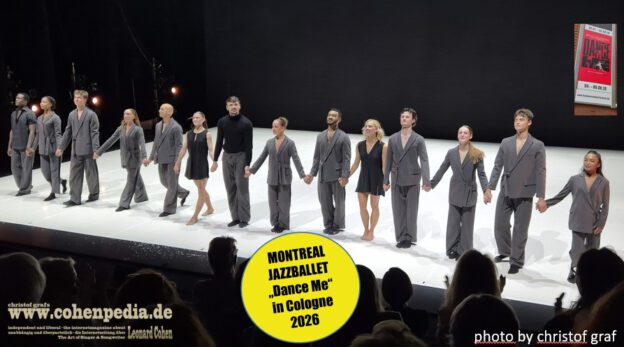
KW-32-2026: The Transformation of Leonard Cohen’s Songs into Dance – The „Ballets Jazz Montréal“ at the Cologne Philharmonic Hall 2026 – „Dance Me – Music by Leonard Cohen“ (engl. version)

„Dance Me – Music by Leonard Cohen“ (engl. version) 

The Transformation of Leonard Cohen’s Songs into Dance

– by Christof Graf/Cohenpedia (photos: christof grag)

The „Ballets Jazz Montréal“ at the Cologne Philharmonic Hall

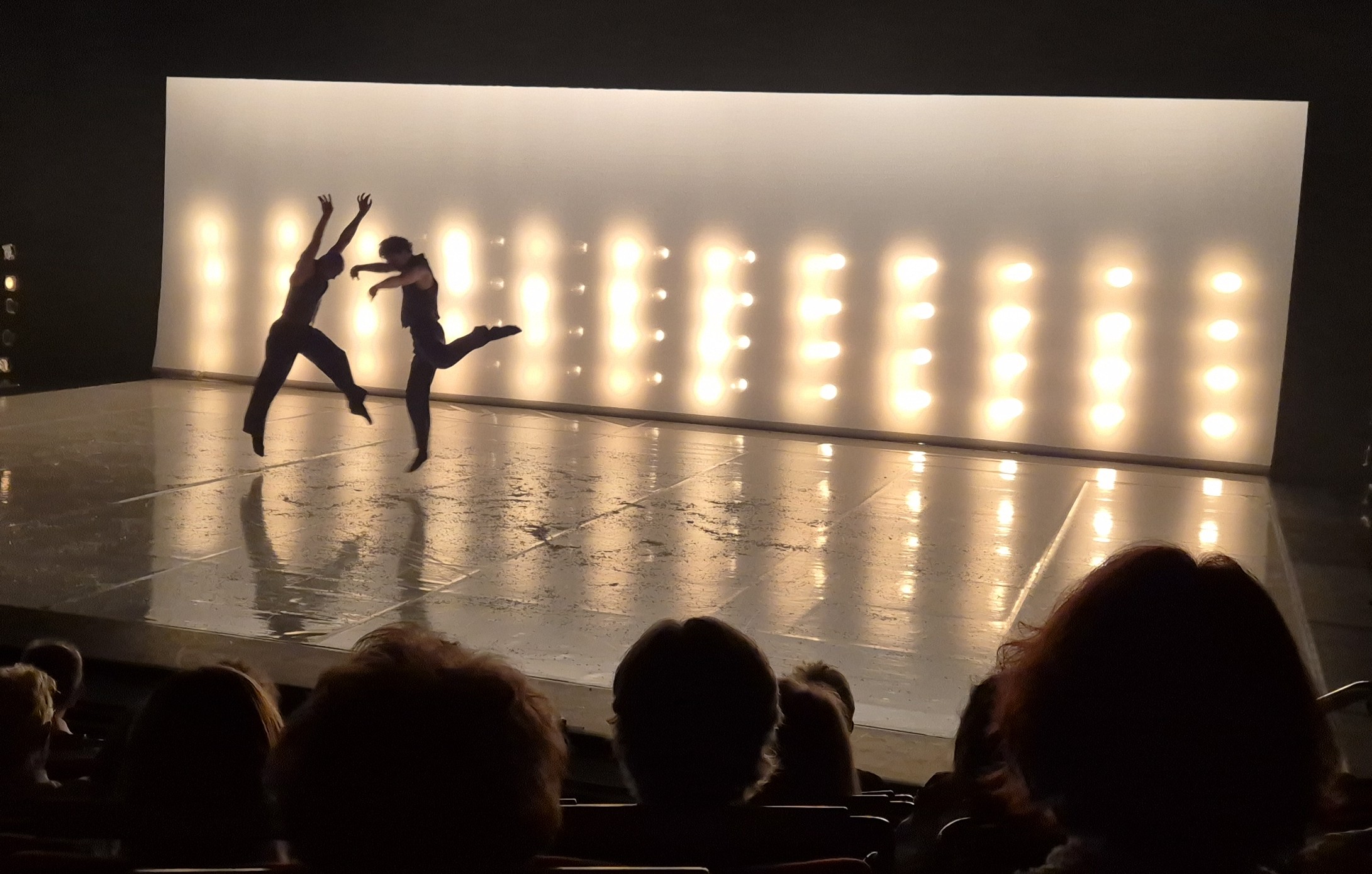
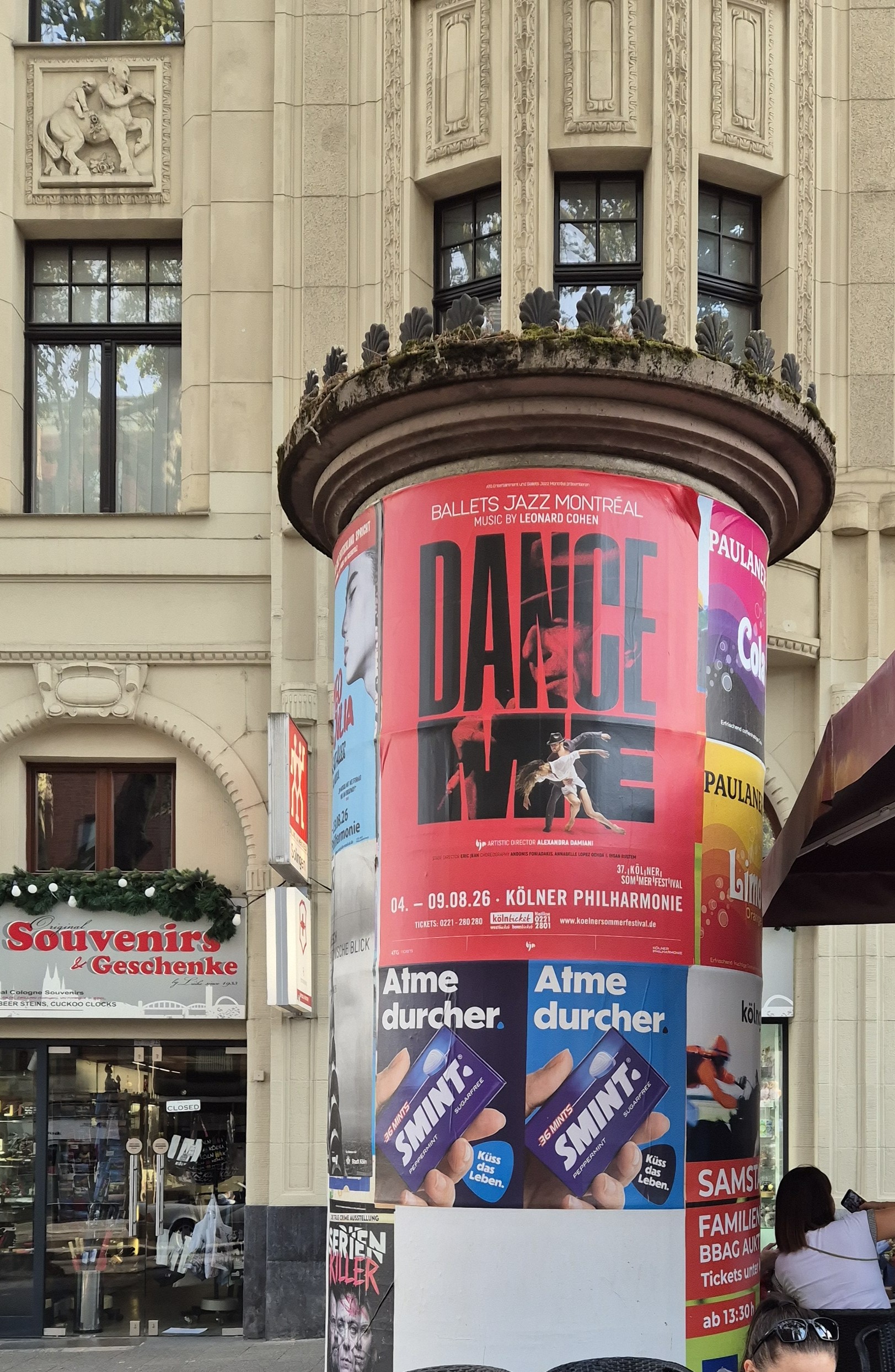
With „Dance Me – Music by Leonard Cohen“, Ballets Jazz Montréal will bring an extraordinary interplay of dance, music, light, video and theatre to the Cologne Philharmonic in August 2026. The production, which premiered in Montréal in 2017 and was personally approved by Leonard Cohen during his lifetime, does not attempt to retell the life of the Canadian singer-songwriter. Instead, she translates his themes – love, desire, loneliness, old age, loss, spirituality and death – into movement. The evening was conceived by Louis Robitaille, the dramaturgy and direction are by Éric Jean; it was choreographed by Andonis Foniadakis, Annabelle López Ochoa and Ihsan Rustem.
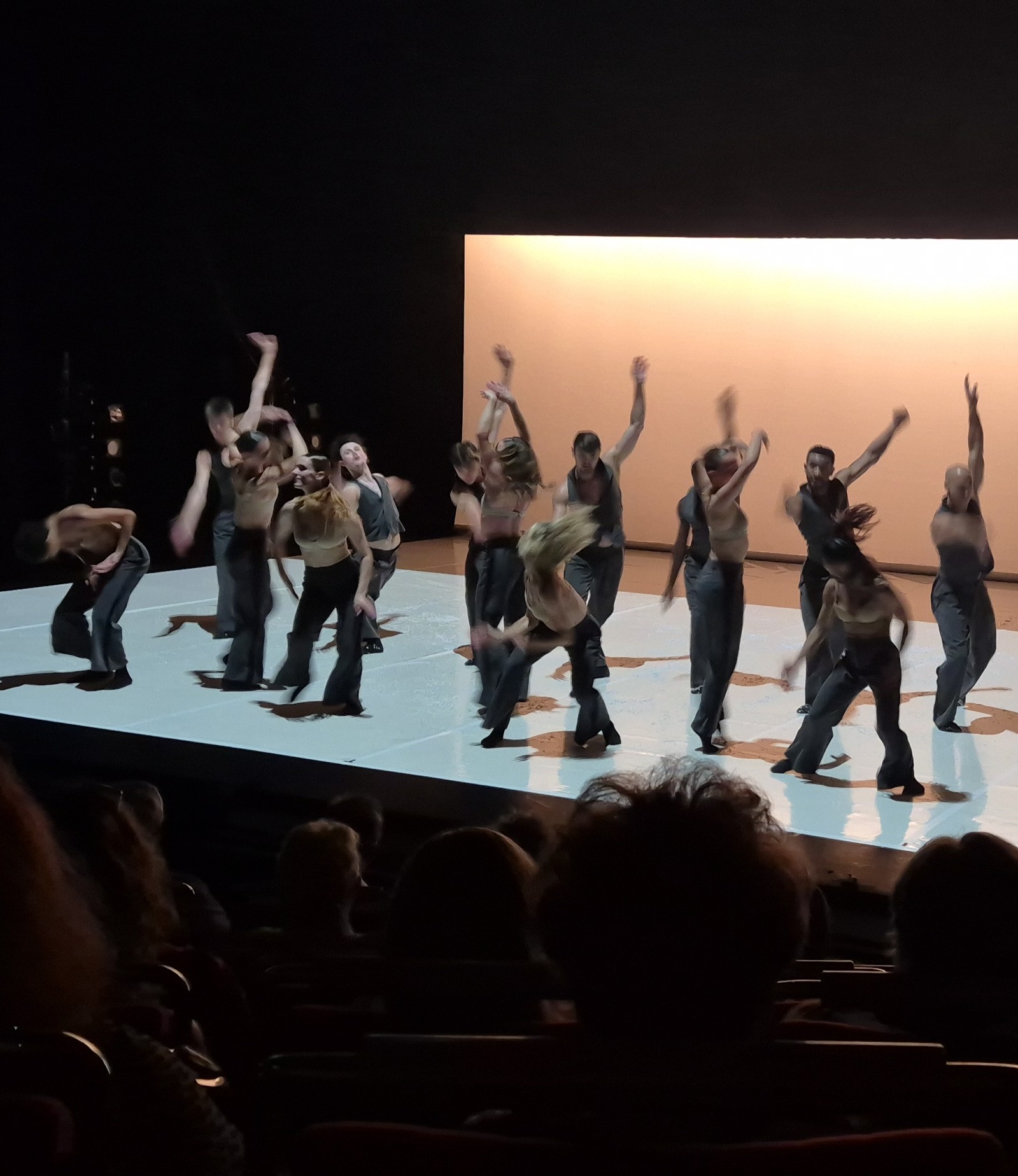
This is precisely where the great strength of „Dance Me“ lies: Cohen is not illustrated, but interpreted physically. The non-stop production, which lasts around 75 to 80 minutes, is divided into five major phases of life or „seasons“. The 16 musical stations do not form a classical plot, but rather a mosaic of human experiences. For the Cologne version, the following order is documented: „Here It Is“, „Lover, Lover, Lover“, „Dance Me to the End of Love“, „Boogie Street“, „Steer Your Way“, „Everybody Knows“, „Tower of Song“, „So Long, Marianne“, „A Thousand Kisses Deep“, „Suzanne“, „Famous Blue Raincoat“, „Treaty“, „First We Take Manhattan“, „It Seemed the Better Way“, „Hallelujah“ and „Treaty Reprise“.

Leonasrd Cohen’s songs do not live from exuberance, but from that peculiar heaviness that arises when a person talks about love and already thinks about death. Cohen’s great themes were desire and its failure, faith and its loss, the beauty of the body and its transience. To make a ballet evening out of this, of all things, could easily lead to decorative melancholy or sentimental admiration. Ballets Jazz Montréal almost completely avoids this danger in „Dance Me – Music by Leonard Cohen“. In the Cologne Philharmonic, Cohen’s music is not illustrated, but physically questioned. The evening does not ask: What does „Hallelujah“ look like? But: What happens to a body that loves, doubts, ages, remembers and finally has to let go? – Therein lies the intelligence of this production. Louis Robitaille conceived „Dance Me“, Éric Jean is responsible for dramaturgy and direction, the choreographies are by Andonis Foniadakis, Annabelle Lopez Ochoa and Ihsan Rustem. Cohen had agreed to the project during his lifetime. The result is neither a musical nor a biography, neither a classical narrative ballet nor a mere greatest hits revue. It is more of a choreographic requiem – but one that celebrates the body before it tells of its finiteness.

„Here It Is“ already sets the tone. Bodies emerge from the darkness, at first less as figures than as apparitions. The movement is tentative, almost ritualistic. The result is that state of limbo that Cohen knew so well: between this world and the hereafter, certainty and doubt. The dancers do not seem to simply enter a stage; they are born, as it were, into a world.

With „Lover, Lover, Lover“ comes desire. The bodies find each other without finding each other permanently. Grasp hands, partners are held, lifted and let go again. Love does not appear here as a harmonious final state, but as a permanent movement towards another person.

The eponymous „Dance Me to the End of Love“ makes it the center of the evening. The title has long since become a romantic commonplace, but the choreography gives it back its uncanniness. „To the end of love“ also means: to the end. Dance becomes a promise that already knows its own transience. Partner work has a great tenderness, but no security. One body catches the other; the next moment he might lose it.

Maybe you can hardly get closer to Cohen physically.

„Boogie Street“ shows that „Dance Me“ does not remain in this elegiac mood. The movement becomes edgier, more secular, almost nervous. The private opens up to the street, to society, to the disorder of life. „Steer Your Way“ intensifies this perspective, before „Everybody Knows“ forms one of the strongest social moments of the evening. Cohen’s bitter „Everybody knows“ is, after all, the opposite of naïve indignation: everyone knows, and yet everything goes on.

This is exactly what the choreography finds in the group. The dancers suddenly function like parts of a system. Movements are repeated, bodies arrange themselves, detach themselves and are recaptured. Individuality and conformity clash. Here, man is not only a lover, but a social being – involved in a world whose mendacity he sees through at the same time.

„Tower of Song“ then allows air. Cohen’s self-irony, without which his pathos could become unbearable, finds a more playful physical form. The dancers show attitude, rhythm, almost coquetry. That’s dramaturgically clever. For an evening that treated Cohen exclusively as the high priest of melancholy would suppress precisely the wit with which this man repeatedly undermined his own gloom.

With „So Long, Marianne“, intimacy returns. Zoey Anderson’s singing changes the relationship between body and music. Suddenly, the voice is no longer just a recording above the dance room, but comes from a person who is himself part of this room. This makes farewell more immediate. „So Long, Marianne“ is not staged as a big separation drama. That’s exactly what makes it moving. Some relationships don’t end with a bang. They become memories. It is oneof the most touching moments of the evening. At that moment, the boundary between dance and concert is deliberately abolished. This gives „So Long, Marianne“ a special intimacy: the dance partially recedes and the voice itself becomes the emotional body of the piece. Farewell is not portrayed as a dramatic collapse, but as an ambivalent state between grief, remembrance and gratitude.

„A Thousand Kisses Deep“ pushes this thought further into the dreamlike. The choreography loosens its contours. The dancers fall, float, disappear into each other. The kiss has long since ceased to be a concrete gesture here. It is a memory of intimacy – something that remains stored in the body even though the moment itself has disappeared.

And then „Suzanne“. Hardly any other character in Cohen is more overlaid with projections. The production resists the temptation to turn it into a small love drama. Rather, Suzanne remains what she has always been in Cohen’s song: at once a woman and an imagination, physically close and mentally unattainable. Dance makes this unavailability visible. Closeness does not mean possession.

„Famous Blue Raincoat“ is consequently one of the most melancholic moments. Relationships are no longer the present, but history. Movements begin as if they wanted to repeat an encounter that is long gone. The dancers reach each other and miss each other at the same time. The space between two bodies suddenly becomes more important than the bodies themselves.

In „Treaty“, this becomes the desire for reconciliation. Cohen has always understood the love relationship as a form of negotiation: between freedom and commitment, guilt and forgiveness, body and mind. The choreography finds balancing acts for this. One carries the weight of the other. One gives way so that the other can stand. It’s a nice image for any serious relationship: balance is not something you own. It must be produced continuously.

Then „First We Take Manhattan“ breaks into this evening.

The dancers transform. Where vulnerability previously prevailed, power, precision and attack suddenly rule. The group does not march, and yet their movement has something of a conquest machine. Power becomes physical. Ambition becomes rhythm. The dance virtuosity of the ensemble is particularly evident here – jumps, rapid changes of direction and complex formations possess an almost aggressive elegance.

It would be easy to be seduced by this technical brilliance. But the choreography counters it with a bitter undertone. Whoever conquers Manhattan has by no means conquered himself.

„It Seemed the Better Way“ then seems like the disillusionment of an old man. The movement is losing its demonstrative gesture. She becomes smaller, more concentrated. It is precisely this reduction that is strong. The late Cohen no longer speaks with the self-assurance of a young lover. He speaks as someone who has learned that neither religion, nor love, nor art provide definitive answers.

Then comes the play that should actually be unsalvageable: „Hallelujah“.

Too many casting shows, weddings, funerals and pathetic cover versions have turned Cohen’s contradictory song into a universal wallpaper of emotions. Ballets Jazz Montréal fortunately resists the temptation to add even more pathos to it. Zoey Anderson and DaMond LeMonte Garner sing while the choreography takes a back seat.

This is the right decision.

Because Cohen’s „Hallelujah“ was never the song of unbroken redemption. It’s about failure and about being able to say a hallelujah anyway. Of faith after the loss of certainty. Of love after disappointment. Of beauty, although you know that it will pass.

The bodies on stage don’t have to prove anything anymore. They are simply there.

The concluding „Treaty Reprise“ therefore does not lead the evening to a triumphant end. It leads him back to the desire for understanding. Perhaps in the end there is no victory, but only the possibility of making peace with the other – and with oneself.

The ensemble carries this idea with impressive physical presence. The cast released for 2026 includes Zoey Anderson, Gustavo Barros, Millie Brinck-Dubuc, Yosmell Calderon Mejias, Marcel Cavaliere, Kyle Davis, Jasmine Heart Cruz, Shanna Irwin Calderon, Miu Kato, DaMond LeMonte Garner, Zack Preece, Madelaine Salhany, and Silje Vereide; Troy Atamanuk is listed as Intern. Yosmell Calderon Mejias in particular possesses that self-evident stage authority in which technical safety is no longer visible as technology. Anderson and Garner, on the other hand, expand the expressive possibilities of the ensemble as singing dancers.

But it would be wrong to cut individual stars out of this evening. Its real main character is the community of bodies. Again and again, couples, trios and groups emerge, only to dissolve again. A person steps forward and disappears again into the crowd. This suits Cohen: the individual desperately craves uniqueness and yet knows that his elementary experiences – love, jealousy, loss, old age and death – are shared by millions of others.

„Dance Me“ also has great aesthetic coherence. Darkness, backlighting, projections and reduced costumes create a space that is less a scene than a landscape of consciousness. Sometimes you see shadows rather than people. Sometimes a body seems to emerge from the darkness only for seconds.

Transience can hardly be staged more beautifully.

Nevertheless, the evening is not entirely without objections. Sixteen musical stations in just under eighty minutes create an enormous density. Not every choreographic idea gets the time it deserves. Some motifs – falling, catching, circling, separating – recur so frequently that poetic repetition occasionally becomes choreographic convention. And at times the visual beauty of the evening is so complete that you wish there was a crack in this perfection: something ugly, unwieldy, really disturbing.

Because Cohen was not only elegantly melancholic. It could be obscene, political, bitter and cruel. „Dance Me“ occasionally loves his Cohen a little too much.

But that is an objection to an extraordinarily successful evening. It is crucial that Ballets Jazz Montréal does not approach the music in a submissive way. The choreographers do not illustrate Saint Leonard. They take his thoughts and expose them to another art form.

In the process, something remarkable happens: you start to hear Cohen’s music differently because you have seen it.

The body proves to be perhaps the most suitable instrument for these songs. Because everything Cohen wrote about ultimately happens to him: We desire with the body. We touch and are touched. We carry others and drop them. We age. We lose. And at some point, the very body that experienced all this disappears.

That’s why this evening is called „Dance Me to the End of Love“ and not just „Dance with Me“.

Dance me to the end.

This is a request and a declaration of love, but also a consciousness of death. Ballets Jazz Montréal understands this small difference. And it is from this that production gains its real greatness.

In the end, there is no big choreographic exclamation mark. What remains is something much more Cohen-like: a doubt, a memory, perhaps a kind of consolation. The last word does not belong to certainty, but to reconciliation.

And somewhere between a fallen body, an outstretched hand and a final „Hallelujah“, one understands what this evening is capable of at the best moment: he does not dance to Leonard Cohen.
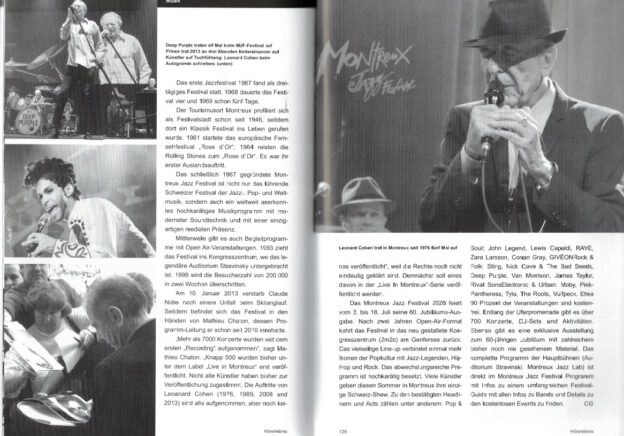
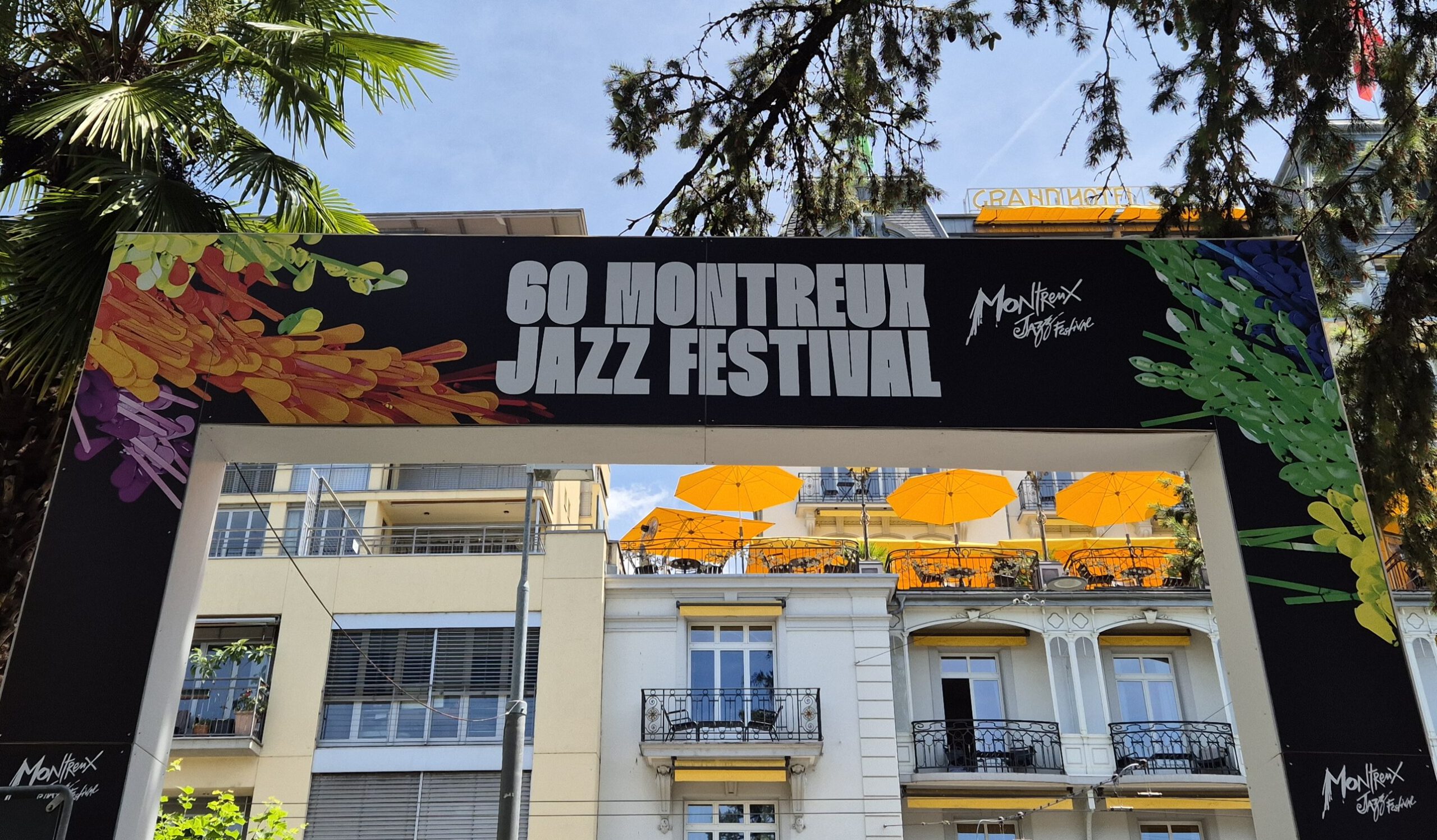
KW-29-2026: Montreux Jazz – Festival – 2026 -The 60th Edition – Die finale Pressemitteilung 2026

→ +250.000 Festivalbesucher*innen
→ 91 % durchschnittliche Auslastung der kostenpflichtigen Bühnen
→ 550 akkreditierte Journalist*innen und Fotograf*innen
→ Über 700 Konzerte und Veranstaltungen
→ 51 per Live-Streaming übertragene Konzerte
→ 9,5 Millionen Aufrufe der Konzertmitschnitte auf YouTube und in den sozialen Netzwerken

KW-28-2026: Nick Cave Live beim 60th Montreux Jazz Festival – Intensiv, düster und ausdrucksstark – Magische Momente

ABSCHLUSS DER 60. AUSGABE

EINE GESCHICHTE, DIE SICH STÄNDIG NEU ERFINDET

Die 60. Ausgabe des Montreux Jazz Festivals geht am Samstag nach sechzehn Festtagen zu Ende – mit einem Blick zurück auf die Geschichte und einem Blick in die Zukunft. Als erste Veranstaltung, die seit der Renovierung im Kongresszentrum stattfand, hat diese Jubiläumsausgabe die Weichen für zukünftige Ausgaben gestellt und den Festivalbesuchern*innen ein reibungsloseres Erlebnis geboten, insbesondere dank eines neu gestalteten Rundgangs entlang der Quais. Das Festival verzeichnete mehr als 250’000 Besucher*innen bei einer durchschnittlichen Auslastung von 91% in den kostenpflichtigen Sälen.

Das Montreux Jazz Festival ist seit jeher von einer einzigartigen Zeitlichkeit geprägt, die zwischen der Magie des Augenblicks und den Echos seiner Geschichte schwebt. Dieses ganz besondere Zeitverständnis – das im Mittelpunkt des vom Festival anlässlich seiner 60. Ausgabe herausgegebenen Buches „The Elegance of Time“ steht – stand in diesem Jahr mehr denn je im Vordergrund.

KW-28-2026: Aldous Harding beim 60th Montreux Jazz Festival – Verstörend, eindringlich und offenbahrend – Rätselhafte Verzauberung

Einerseits blickte diese Ausgabe in die Zukunft und schlug ein neues Kapitel in der Geschichte des Festivals auf: ein komplett renoviertes Kongresszentrum, neu gestaltete kostenlose Bühnen, ein erweiterter Veranstaltungsparcours entlang der Uferpromenade und ein Programm, das sich weitgehend den neuen Künstlergenerationen widmete. Andererseits war die Ausgabe, tief in ihrem Erbe verwurzelt, von einem ständigen Dialog mit der Geschichte des Festivals geprägt: Tributkonzerte, eine Museumsausstellung, Archivvorführungen und Verweise auf die großen Momente, die seine Legende geprägt haben. Getreu dem von Claude Nobs geprägten Pioniergeist hat diese 60. Ausgabe somit ein wertvolles Gleichgewicht zwischen der Würdigung eines weltweit einzigartigen Erbes und dem ständigen Bestreben, sich neu zu erfinden, gefunden.

HÖHEPUNKTE DER 60. AUSGABE

Die Jubiläumsausgabe wurde mit einem unvergesslichen Abend eröffnet. Die außergewöhnliche Inszenierung von RAYE, die gemeinsam mit Audemars Piguet entstanden ist, wird als einer der Höhepunkte der jüngeren Festi­valgeschichte in Erinnerung bleiben. Das Auditorium Stravinski wurde für diesen Anlass komplett umgestaltet: Im Zentrum des Publikums wurde eine rotierende achteckige Bühne installiert, und an hängenden Vorhängen wurden Archivaufnahmen des Festivals mit der visuellen Welt der Künstlerin kombiniert. Über zwei Stunden lang führte RAYE mit einer eigens für diesen Anlass zusammengestellten Setlist durch sechs Jahrzehnte Festivalgeschichte und würdigte dabei die Konzerte von Nina Simone, Prince, Aretha Franklin, James Brown und Ray Charles. Und natür­lich gab es diesen wahnsinnigen Höhepunkt, diese kollektive Euphorie, als die Überraschungsgäste Mark Ronson und Alicia Keys auf die Bühne traten, die uns die große Ehre erwiesen, diese außergewöhnliche Einladung zur 60. Ausgabe anzunehmen.

Verbundenheit mit dem Festival. So würdigte Sienna Spiro das 50-jährige Jubiläum des legendären Konzerts von Nina Simone, bevor sie zum ersten Mal den Standard „Autumn Leaves“ interpretierte. Nur achtzehn Monate nach ihrem Auftritt vor 200 Zuschauern bei den Spotlight Sessions in Villars bestätigte die britische Sängerin ihren kome­tenhaften Aufstieg in einem ausverkauften Montreux Jazz Lab. Die Brasilianerin Liniker, die seit ihrem 16. Lebensjahr von diesem Moment geträumt hatte, konzipierte eine spezielle Show für Montreux, bei der dreizehn Musiker auf der Bühne standen und der Pianist Amaro Freitas als besonderer Gast für eine Jazz-Einlage mit Klavier und Gesang mitwirkte. Die Londoner Band Ezra Collective, die nach der Absage der Isley Brothers kurzfristig eingeladen worden war, begeisterte das Auditorium Stravinski und erinnerte an ihre Geschichte mit dem Festival, die 2018 bei der Jubiläumsfeier von Quincy Jones in Montreux ihren Anfang nahm.

Zahlreiche Künstler*innen, die zum ersten Mal nach Montreux eingeladen wurden – wie Joy Crookes, Nectar Woode oder Noga Erez –, teilten ebenfalls auf der Bühne oder hinter den Kulissen ihre Begeisterung darüber, Teil einer Geschichte zu werden, die auch heute noch neue Generationen inspiriert. Der japanische Produzent ¥ØU$UK€ ¥UK1MAT$U würdigte das Festival seinerseits auf seine ganz eigene Weise: Er hatte ein maßgeschneidertes, stark vom Jazz geprägtes Set vorbereitet, in dem er Klavierloops, synkopierte Rhythmen und dekonstruierte Bläserklänge miteinander verband.

Die Rückkehr ins Auditorium Stravinski ermöglichte es zudem, jene Momente absoluter Intimität wiederzuerleben, die die Einzigartigkeit von Montreux ausmachen. Seinem Ruf treu bleibend, schenkte das Festivalpublikum den Künstlern*innen diese Momente der angehaltenen Stille und der seltenen Aufmerksamkeit. Dies galt insbesondere für die subtilen Auftritte von Maro oder Aldous Harding, für ein Solo-Klavierkonzert von John Legend, für ein Finale von Lewis Capaldi allein mit der Akustikgitarre oder auch für ein erhabenes „Into My Arms“ mit Klavierbegleitung und Gesang von Nick Cave. Die zeitlose Eleganz des Auditorium Stravinski bot zudem den idealen Rahmen für das erste Konzert von GIVĒON in der Westschweiz. Der charismatische Crooner zeigte dort Klasse im alten Stil und setzte auf eine ungeschminkte Bühnenpräsenz, die durch Lichtspiele und projizierte Schatten geprägt war.

Das Auditorium Stravinski hat zudem – vielleicht mehr denn je – bei einer neuen Generation von Festivalbesuchern Anklang gefunden, die sich diesen symbolträchtigen Ort auf ihre ganz eigene Weise zu eigen gemacht hat. Die Konzerte von PinkPantheress, Conan Gray oder auch Tyla sorgten für eine außergewöhnliche Atmosphäre, geprägt von Leidenschaft und Begeisterung, zwischen gemeinsam gesungenen Liedern und Outfits, die von ihren Idolen inspiriert waren. Dieser Schwung erreichte seinen Höhepunkt mit Zara Larsson, deren Auftritt durch eine beeindruc­kende Gesangsleistung, eine starke künstlerische Ausrichtung und eine Botschaft der Selbstermächtigung, die sich bis in ihr ausschließlich aus Frauen bestehendes Team widerspiegelte, einen bleibenden Eindruck hinterließ.

Zum Abschluss der Jubiläumsausgabe steht eine Reihe von Konzerten mit hoher symbolischer Bedeutung auf dem Programm: Marcus Miller würdigt Miles Davis, während Charles Lloyd den 60. Jahrestag seines Auftritts bei der alle­rersten Ausgabe im Jahr 1967 feiert. Um diesen historischen Moment zu würdigen, überreichte Mathieu Jaton ihm eine Ehrenauszeichnung und erkannte damit seinen unbestrittenen Status als „erste Legende“ des Montreux Jazz Festivals an. Am Abschlussabend treffen im Auditorium zwei Giganten der Folk-Musik aufeinander: Van Morrison und James Taylor, während Cerrone im Montreux Jazz Lab eine symphonische Neuinterpretation seines Repertoires präsentieren wird.

JAM-SESSIONS, ÜBERRASCHUNGSKONZERTE UND ANSPIELE AUF DIE GESCHICHTE DES FESTIVALS

Die wiedergewonnene Nähe zwischen den kostenpflichtigen Bühnen des Kongresszentrums und dem Lake House, die nur wenige Schritte voneinander entfernt liegen, ermöglichte erneut eine hervorragende Auswahl an Jam-Ses­sions mit zahlreichen Künstlern*innen, die sich daran beteiligten, darunter RAYE, Sienna Spiro, Naïka, Nectar

Woode, Liniker und Dermot Kennedy. Auch andere, in letzter Minute angekündigte Überraschungsveranstal­tungen prägten diese 60. Ausgabe, wie beispielsweise das kostenlose Konzert von Leon Bridges, der im „Memphis“ sein neues Album vorstellte, oder der Auftritt von Adriatique im „Duplex“, der neuen Bühne des Festivals, die der elektronischen Musik gewidmet ist.

Im Lake House boten zahlreiche Aktivitäten die Gelegenheit, das reiche musikalische und kulturelle Erbe von Montreux zu entdecken. Die Workshops, Filmvorführungen und Vorträge trugen dazu bei, die bedeutendsten Kapitel der Festivalgeschichte während der gesamten Veranstaltung wieder aufleben zu lassen. Liniker sprach dort insbesondere über die Verbindungen zwischen Musik und politischem Engagement anhand von Aussch­nitten aus Konzerten von Gilberto Gil und Ney Matogrosso in Montreux; Tomoki Sanders erlebte einen besonders bewegenden Moment, als er Bilder seines Vaters Pharoah Sanders in Montreux entdeckte, die er seit fast zwanzig Jahren nicht mehr gesehen hatte; während Marcus Miller mehrere Archivaufnahmen von Miles Davis beim Festival kommentierte. Die Ausstellung „Putting Montreux on the Map“ stieß ihrerseits auf sehr positive Resonanz und zog täglich mehr als hundert Besucher an, die die Geschichte und den kulturellen Einfluss der Stadt entdecken wollten.

RENOVIERTES KONGRESSZENTRUM UND ERWEITERTER SPAZIERGANG ENTLANG DER KAIS

Die 60. Ausgabe war die erste Großveranstaltung, die seit der Renovierung im Kongresszentrum stattfand, und stellte somit einen echten Praxistest dar. Trotz eines engen Zeitplans bei den Vorbereitungen meisterten die Teams die Herausforderung erfolgreich und verfeinerten im Laufe des Festivals einige operative Anpassungen. Terrassen, Treppen und neue Bereiche wurden so schnell in das Erlebnis der Festivalbesucher integriert und ermöglichten einen reibungsloseren Besucherfluss. Schließlich sorgte der Blick auf den See vom Foyer des Stravinski-Auditoriums aus, der durch die neuen Glasfassaden noch verstärkt wurde, bei vielen Festivalbesuchern*innen für Begeisterung.

Der sich über die Uferpromenade erstreckende Parcours fand großen Anklang und lockte zahlreiche Festivalbe­sucher*innen bis zu den Spotlight- und Super-Bock-Bühnen, die im östlichen Teil des Geländes aufgebaut waren. Im Parc Vernex versprühte das Paloma mit spanischen Aromen, einer sonnigen Terrasse und einem Badebereich sommerliche Urlaubsstimmung. Das Duplex, die neue Elektro-Bühne des Festivals, prägte diese 60. Ausgabe mit einem Lichtspiel und einer immersiven Bühnenbildgestaltung.

DAS FESTIVAL AUF DEN LEINWÄNDEN DER GANZEN WELT

Insgesamt wurden 51 Konzerte – das sind drei Viertel des kostenpflichtigen Programms – live und kostenlos übertragen. Die Konzertmitschnitte, die in voller Länge auf YouTube und in Ausschnitten in den sozialen Netzwerken veröffentlicht wurden, erzielten insgesamt mehr als 9,5 Millionen Aufrufe (Zahlen vom 16. Juli, die letzten drei Festi­valabende sind darin nicht berücksichtigt). Die meistgesehenen Auftritte waren, in dieser Reihenfolge, die von RAYE, Zara Larsson und Moby. Das Eröffnungskonzert von RAYE profitierte zudem von einer breiten Reichweite dank einer Sondersendung in Zusammenarbeit mit ARTE und RTS. Diese Aufnahmen, die von Montreux Media Ventures – der für die Produktion und den Vertrieb von Inhalten zuständigen Tochtergesellschaft des Festivals – produziert wurden, wurden sowohl von den Künstlern*innen und ihren Teams als auch von den Online-Zuschauern und -Zuschauerinnen für ihre Klangqualität und ihre filmische Ästhetik gelobt.

Das Montreux Jazz Festival baut somit seine internationale Ausstrahlung durch die Verbreitung von Inhalten weiter aus – eine Strategie, die Claude Nobs bereits zu Beginn des Festivals ins Leben gerufen hatte. Diese Bekanntheit wird auch in den sozialen Netzwerken gestärkt, wo die Künstler*innen selbst zu den besten Botschaftern des Festivals und seiner Region werden. So erinnerte Alicia Keys an die historische Bedeutung des Konzerts von Nina Simone vor 50 Jahren, während Zara Larsson mit ihrer Community ihre Begeisterung für die einzigartige Kulisse der Waadtländer Riviera teilte und Montreux sogar als „europäisches Hawaii“ bezeichnete.

BILANZ TICKETVERKAUF UND F&B

Die 60. Ausgabe zog mehr als 250’000 Besucher*innen an. In den kostenpflichtigen Veranstaltungsräumen lag die durchschnittliche Auslastung bei bemerkenswerten 91 %. Das Montreux Jazz Lab verzeichnete mit einer Auslas­tung von 88 % sein bestes Ergebnis seit seiner Gründung im Jahr 2013. Die Ticketverkaufsziele – die höchsten in der Geschichte des Festivals in seiner gewohnten Form – wurden bereits am zweiten Wochenende erreicht, und das trotz eines starken Anstiegs der Produktionskosten, der insbesondere auf die deutlich gestiegenen Künstlerhono­rare zurückzuführen war.

Die Umsatzziele im Bereich F&B (Food & Beverage) dürften am letzten Wochenende erreicht werden, ganz im Sinne der beiden vorangegangenen Ausgaben, trotz der Konkurrenz durch die Fußball-Weltmeisterschaft und der für die Gastronomie wenig günstigen Hitzewelle.


Engl. translation coming soon 🙂

KW-29-2026: Montreux Jazz – Festival – 2026 -The 60th Edition – #MOMENTAUFNAHMEN , Snippets & Impressions

Momentaufnahmen , Impressions & Snipptets of :

knapp 40 Minuten Momentaufnahmen:

Putting Montreux on the Map: exhibition curator Stéphanie-Aloysia Moretti (Ausstellungskuratorin) Stéphanie-Aloysia Moretti talking about the exhibition in Montreux Grand Palace Hotel

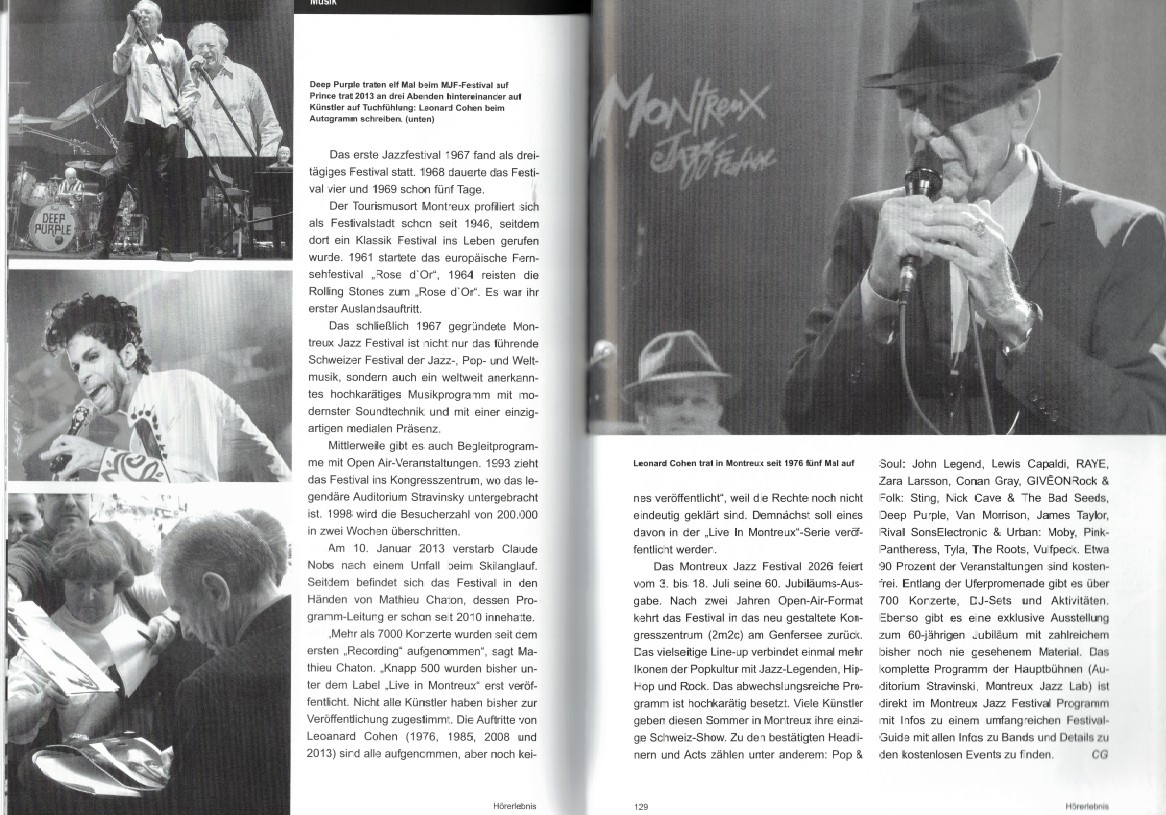
Bob Dylan & Leoard Cohen-Fotos at Montreux Jazz Café

Roger Glover of Deep Purple talks about Montreux

Nick Cave & The Bad Sees in concert: “Fuckin`Montreux”

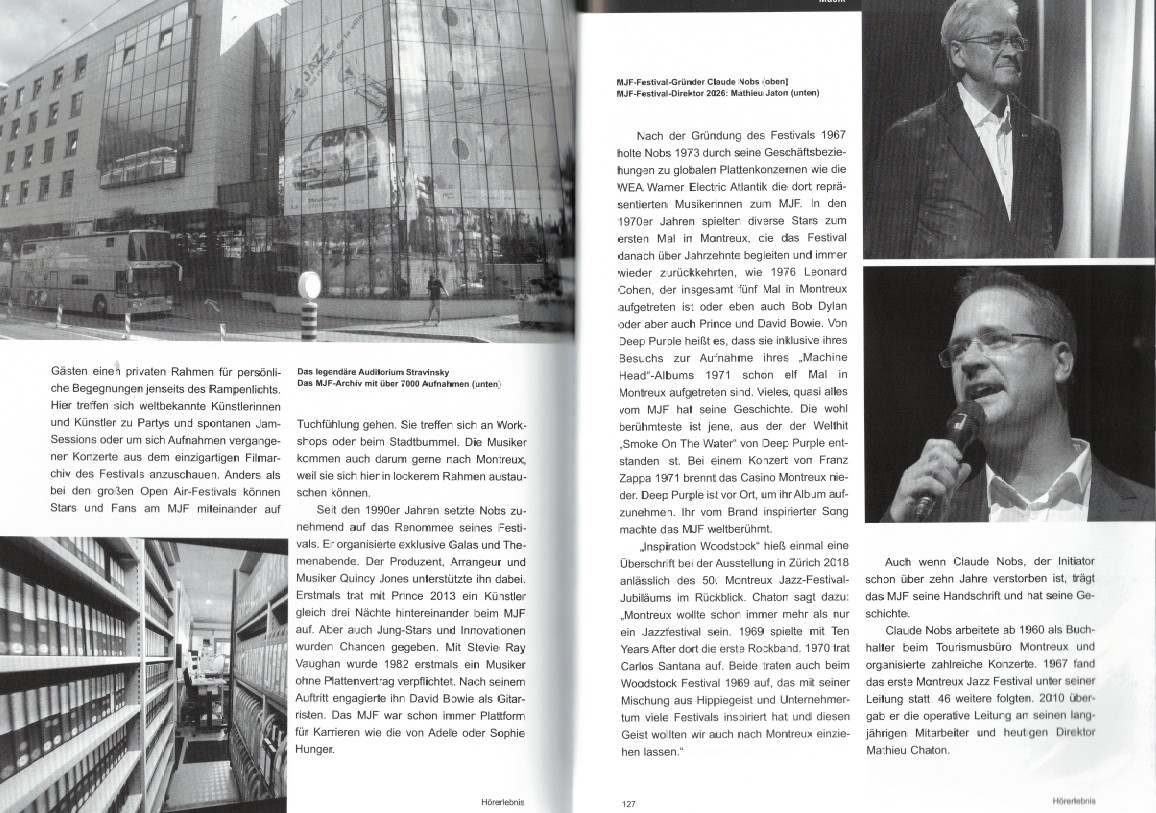
Climbing up at Haut de Caux, where Claude Nobs`Chalets are

Walking at the Lake Geneva

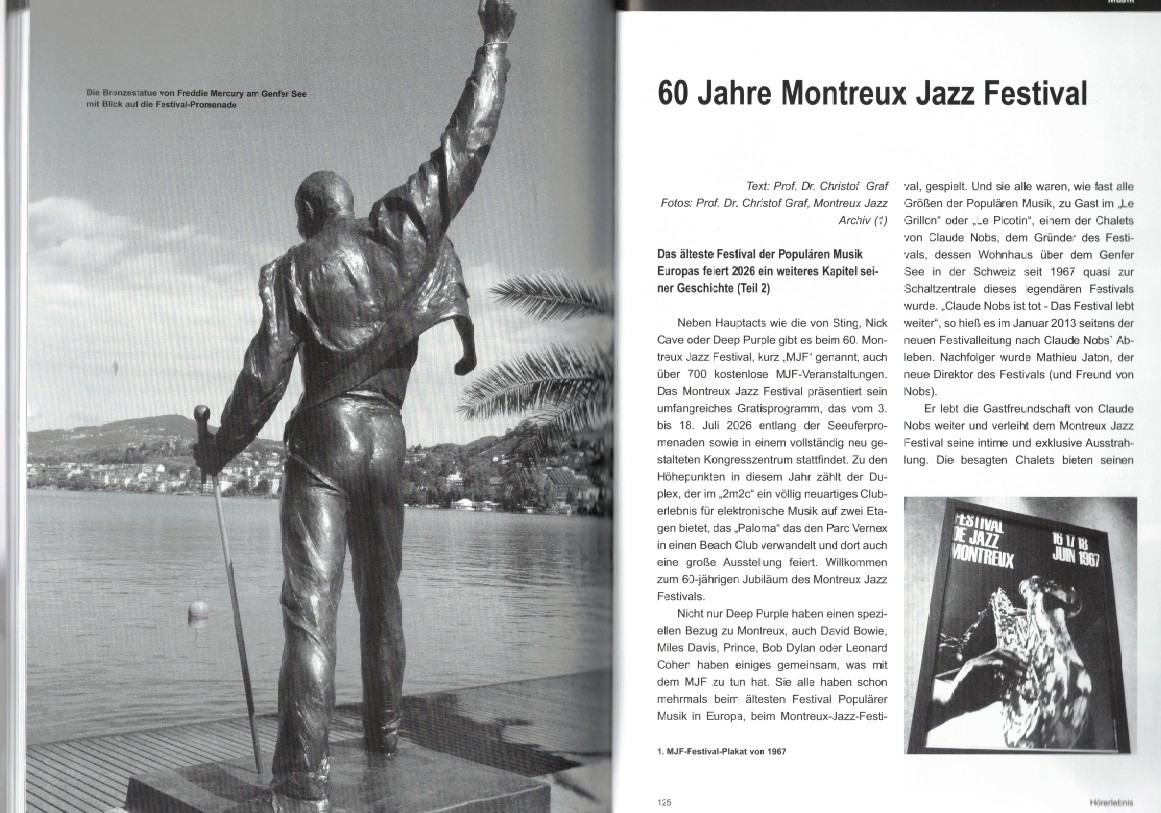
Visiting the Statue of Queen`s Freddie Mercury in Montreux

Leaving Montreux 2026

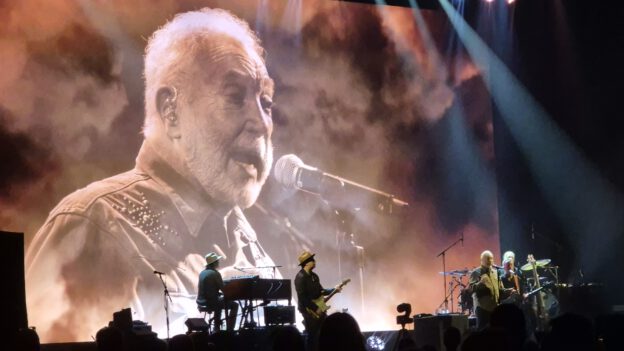
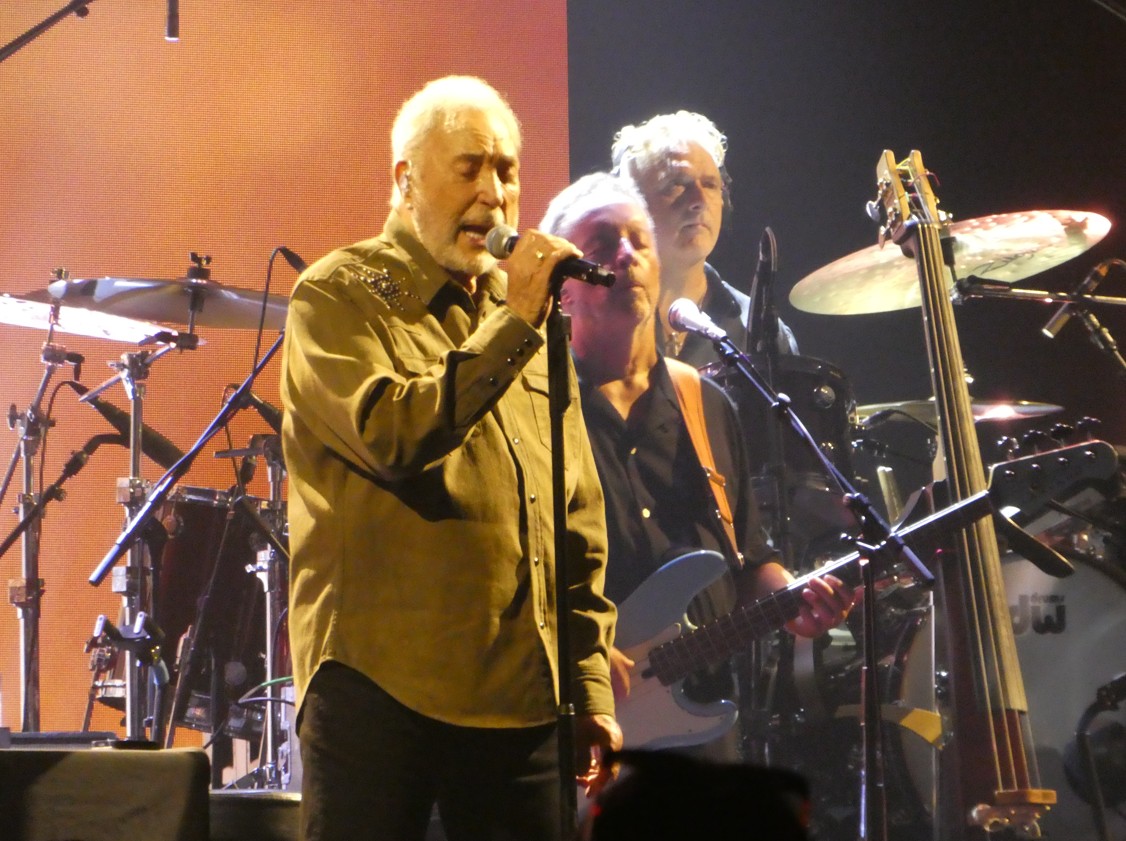
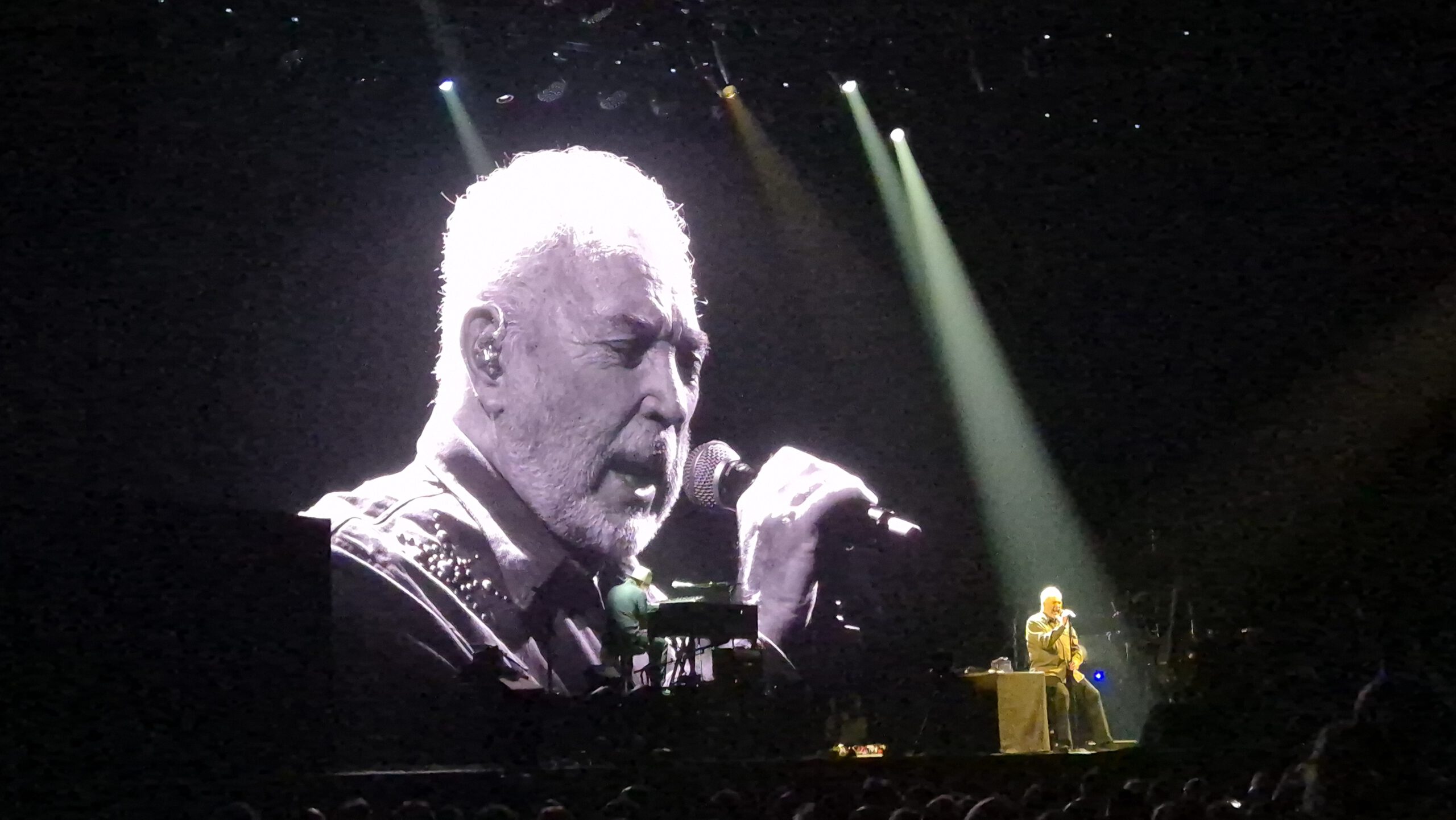
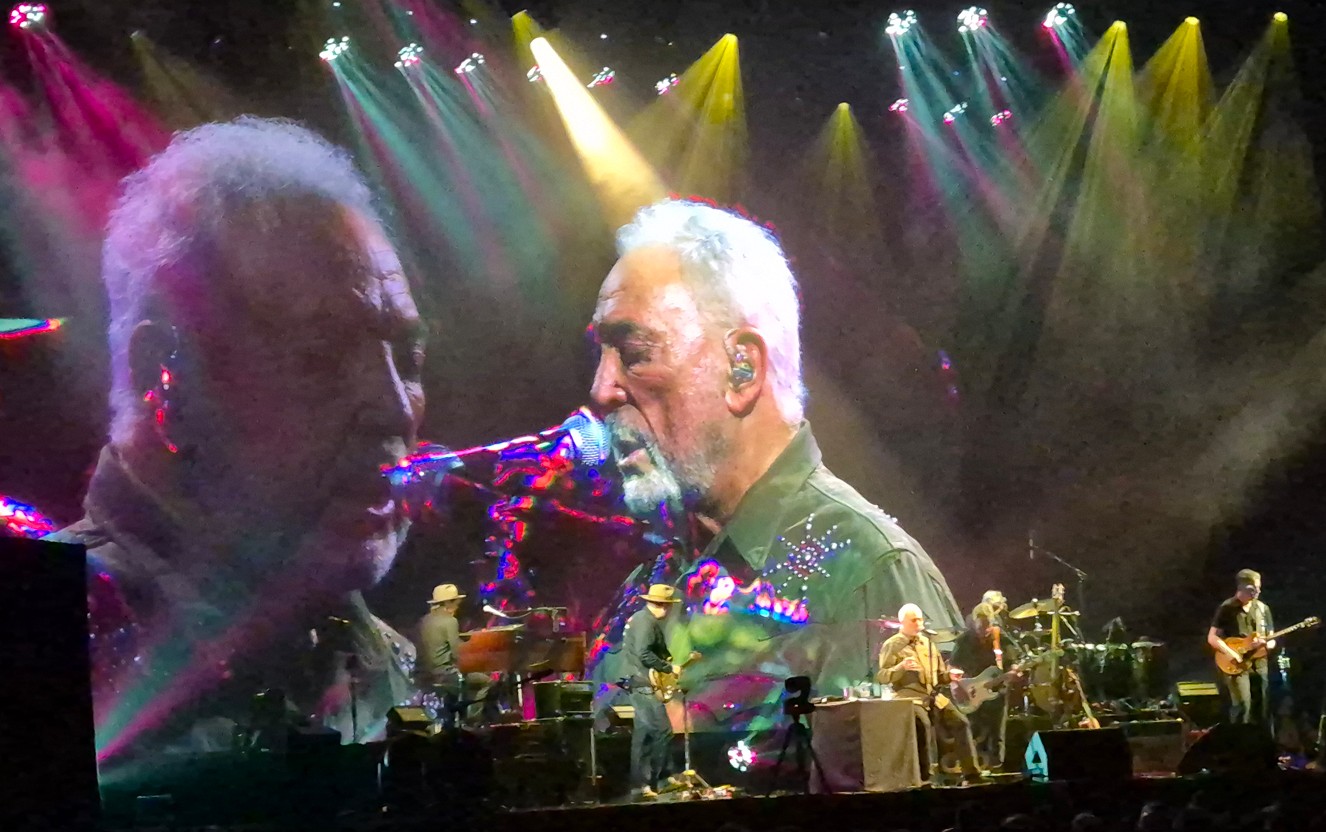
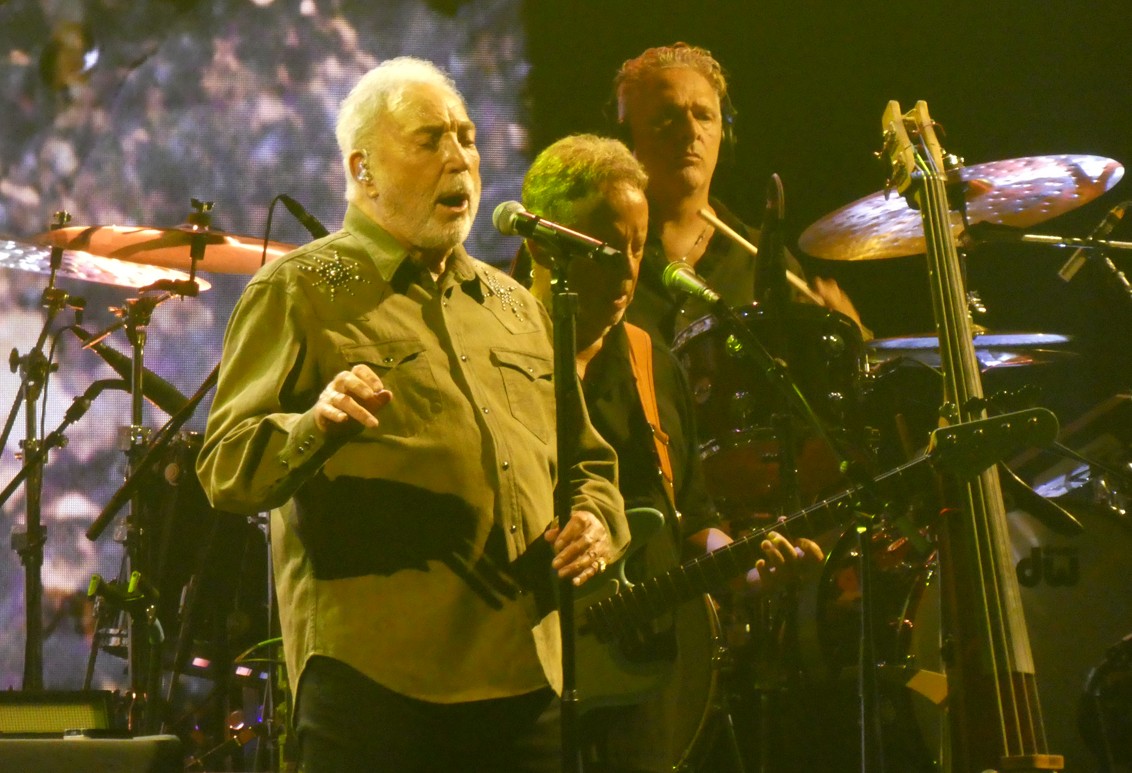
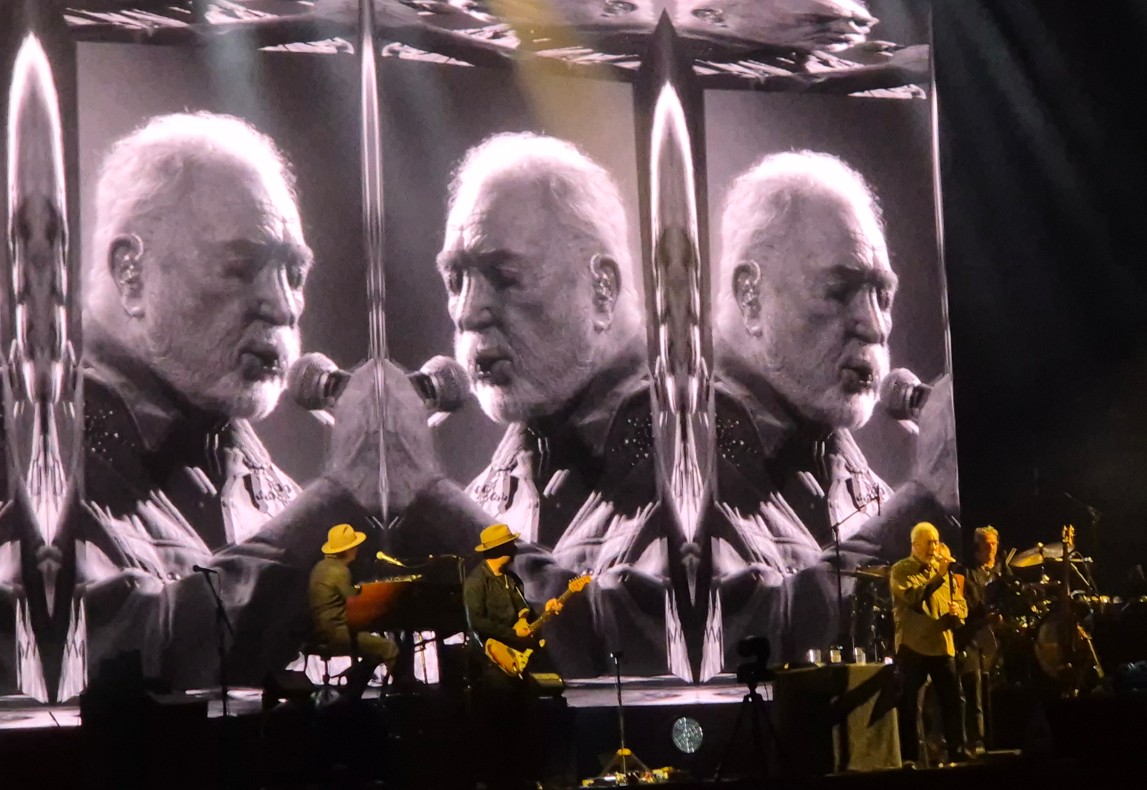
KW-29-2026: „Fest des Liedes“ at Tom Jones in Frankfurt (Engl. & German Version) : Between great hits and moving tributes to Bob Dylan and Leonard Cohen – Tom Jones singt „Tower Of Song“ von Leonard Cohen auf seiner „Come Gather Round“-Tournee 2026 in Frankfurt a.M./ Germany, gestern am 16. Juli 2026 in der Festhalle

photos: christof graf

„Fest des Liedes“ bei Tom Jones in Frankfurt: Zwischen großen Hits und bewegende Hommagen an Bob Dylan und Leonard Cohen

Wer am 16. Juli 2026 die Festhalle Frankfurt betrat, erlebte keinen nostalgischen Rückblick auf vergangene Erfolge, sondern einen Künstler, der auch mit 86 Jahren nichts von seiner Ausstrahlung verloren hat. Sir Tom Jones zeigte eindrucksvoll, weshalb er seit Jahrzehnten zu den prägendsten Stimmen der internationalen Musikszene gehört. Seine „Come Gather Round“-Tour verbindet bekannte Klassiker mit Liedern, die ihm persönlich am Herzen liegen – und genau diese Mischung machte den Abend zu einem besonderen Konzerterlebnis.

Schon der Auftakt ließ erkennen, dass Jones an diesem Abend mehr erzählen wollte als die Geschichte seiner größten Hits. Mit „I’m Growing Old“ eröffnete er das Konzert in ruhiger Atmosphäre und schlug damit einen nachdenklichen Ton an. Seine Stimme besitzt heute weniger die Kraft früherer Jahre, dafür aber eine Ausdrucksstärke und Wärme, die vielen Liedern zusätzliche Tiefe verleiht.

Besonders eindrucksvoll gelang ihm dies bei Leonard Cohens „Tower of Song“. Anstatt den Titel lediglich nachzusingen, entwickelte Jones daraus eine sehr persönliche Interpretation. Seine langjährige Bühnenerfahrung war in jeder Zeile spürbar. Der Song wirkte wie ein musikalischer Rückblick auf ein außergewöhnliches Künstlerleben und wurde vom Publikum aufmerksam und beinahe andächtig verfolgt.

Einen weiteren Höhepunkt bildeten die Bob-Dylan-Kompositionen. Mit „Not Dark Yet“ bewies Tom Jones eindrucksvoll, dass große Songs nicht von Lautstärke leben. Die ruhige Ballade entfaltete durch seine markante Stimme eine intensive Wirkung und gehörte zweifellos zu den emotionalsten Momenten des gesamten Konzerts. Später folgte mit „One More Cup of Coffee“ ein weiterer Dylan-Klassiker, den Jones gemeinsam mit seiner hervorragend eingespielten Band in einem bluesig-souligen Gewand präsentierte. Gerade diese Fähigkeit, berühmten Songs einen eigenen Charakter zu verleihen, zeichnet ihn seit vielen Jahren aus. Seine Interpretationen wirken respektvoll gegenüber dem Original und tragen dennoch unverkennbar seine persönliche Handschrift.

Natürlich durfte auch der Teil des Programms nicht fehlen, auf den viele Besucher gewartet hatten. Bereits bei „It’s Not Unusual“ sang die nahezu ausverkaufte Festhalle lautstark mit. Auch „What’s New Pussycat?“, „Delilah“, „Help Yourself“, „Green Green Grass of Home“, „Sexbomb“ und „You Can Leave Your Hat On“ sorgten für beste Stimmung. Dabei zeigte sich einmal mehr, wie mühelos Jones zwischen gefühlvollen Balladen, Blues, Soul und kraftvollen Popsongs wechseln kann. Gerade dieser musikalische Facettenreichtum hält seine Konzerte auch nach Jahrzehnten spannend.

Einen wesentlichen Anteil daran hatte auch seine exzellente Begleitband. Die Musiker beschränkten sich nicht darauf, bekannte Titel möglichst originalgetreu wiederzugeben. Stattdessen verliehen sie vielen Songs neue Klangfarben, die Einflüsse aus Blues, Gospel und Soul erkennen ließen. Vor allem die Stücke von Cohen und Dylan profitierten von den fein abgestimmten Arrangements, die den Liedern viel Raum zur Entfaltung gaben.

Die Begeisterung im Publikum war während des gesamten Abends deutlich zu spüren. Immer wieder gab es lang anhaltenden Applaus und Standing Ovations. Besonders beeindruckend war jedoch die Nähe, die Tom Jones trotz der Größe der Halle zu seinem Publikum aufbauen konnte. Er wirkte nie wie ein Star, der lediglich seine größten Erfolge herunterspult, sondern wie ein Musiker, der jedes Lied bewusst auswählt und mit Überzeugung interpretiert.

So blieb am Ende nicht nur die Erinnerung an die zahlreichen Welthits, sondern vor allem an einen Künstler, der sich musikalisch ständig weiterentwickelt hat. Seine Interpretationen von Leonard Cohens „Tower of Song“ sowie Bob Dylans „Not Dark Yet“ und „One More Cup of Coffee“ verliehen dem Konzert eine besondere Tiefe und zeigten eindrucksvoll, wie zeitlos gute Songs sein können. Tom Jones bewies in Frankfurt, dass große Bühnenpräsenz nicht vom Alter abhängt. Mit seiner Erfahrung, seiner unverwechselbaren Stimme und seiner außergewöhnlichen Interpretationskunst gelang ihm ein Konzertabend, der weit über eine gewöhnliche Greatest-Hits-Show hinausging und beim Publikum einen bleibenden Eindruck hinterließ.

SETLIST: 

I’m Growing Old    (Bobby Cole cover)

Tower of Song    (Leonard Cohen cover)

Not Dark Yet    (Bob Dylan cover)

It’s Not Unusual    (Les Reed cover)

What’s New Pussycat?    (Burt Bacharach cover)

Sexbomb    (Mousse T. cover)

You Can Leave Your Hat On    (Randy Newman cover)

Pop Star    (Cat Stevens cover)

One More Cup of Coffee (Valley Below)    (Bob Dylan cover)

Across the Borderline    (Ry Cooder cover)

I Won’t Crumble with You If You Fall    (Bernice Johnson Reagon cover)

Talking Reality Television Blues    (Todd Snider cover)

This Is the Sea    (The Waterboys cover)

Delilah    (Les Reed cover)

Lazarus Man    (Terry Callier cover)

If I Only Knew    (Rise Robots Rise cover)

Kiss    (Prince cover)

Encore:

Green, Green Grass of Home    (Claude “Curly” Putman, Jr. cover)

One Hell of a Life    (Katell Keineg cover)

Strange Things Happening Every Day    (Sister Rosetta Tharpe cover)

Johnny B. Goode    (Chuck Berry cover)

„Fest des Liedes“ at Tom Jones in Frankfurt: Between great hits and moving tributes to Bob Dylan and Leonard Cohen

Anyone who entered the Festhalle Frankfurt on July 16, 2026 did not experience a nostalgic look back at past successes, but an artist who, even at the age of 86, has lost none of his charisma. Sir Tom Jones impressively showed why he has been one of the most influential voices on the international music scene for decades. His „Come Gather Round“ tour combines well-known classics with songs that are close to his heart – and it was precisely this mixture that made the evening a special concert experience.

Even the prelude made it clear that Jones wanted to tell more than the story of his greatest hits that evening. With „I’m Growing Old“ he opened the concert in a quiet atmosphere and struck a thoughtful tone. His voice today has less of the power of earlier years, but an expressiveness and warmth that gives many songs additional depth.

He succeeded particularly impressively in Leonard Cohen’s „Tower of Song“. Instead of merely singing the title, Jones developed a very personal interpretation of it. His many years of stage experience were noticeable in every line. The song seemed like a musical retrospective of an extraordinary artist’s life and was followed attentively and almost reverently by the audience.

Another highlight was the Bob Dylan compositions. With „Not Dark Yet“, Tom Jones impressively proved that great songs don’t live on volume. The quiet ballad unfolded an intense effect due to its distinctive voice and was undoubtedly one of the most emotional moments of the entire concert. Later, another Dylan classic followed with „One More Cup of Coffee“, which Jones presented together with his excellently rehearsed band in a bluesy-soulful guise. It is precisely this ability to give famous songs their own character that has distinguished him for many years. His interpretations seem respectful of the original and yet unmistakably bear his personal signature.

Of course, the part of the program that many visitors had been waiting for was not to be missed. Already during „It’s Not Unusual“, the almost sold-out Festhalle sang along loudly. „What’s New Pussycat?“, „Delilah“, „Help Yourself“, „Green Green Grass of Home“, „Sexbomb“ and „You Can Leave Your Hat On“ also created the best atmosphere. It showed once again how effortlessly Jones can switch between soulful ballads, blues, soul and powerful pop songs. It is precisely this musical richness of facets that keeps his concerts exciting even after decades.

His excellent backing band also played a significant role in this. The musicians did not limit themselves to reproducing well-known titles as faithfully as possible. Instead, they gave many songs new timbres that showed influences from blues, gospel and soul. Especially the pieces by Cohen and Dylan benefited from the finely tuned arrangements, which gave the songs a lot of room to unfold.

The enthusiasm in the audience was clearly noticeable throughout the evening. Again and again there was long-lasting applause and standing ovations. Particularly impressive, however, was the closeness that Tom Jones was able to build up to his audience despite the size of the hall. He never seemed like a star who merely reels off his greatest successes, but like a musician who consciously selects every song and interprets it with conviction.

In the end, not only the memory of the numerous world hits remained, but above all of an artist who has constantly developed musically. His interpretations of Leonard Cohen’s „Tower of Song“ as well as Bob Dylan’s „Not Dark Yet“ and „One More Cup of Coffee“ gave the concert a special depth and impressively showed how timelessly good songs can be. Tom Jones proved in Frankfurt that great stage presence does not depend on age. With his experience, his unmistakable voice and his extraordinary art of interpretation, he succeeded in creating a concert evening that went far beyond an ordinary greatest hits show and left a lasting impression on the audience.