
KW-34-2026: Das Rock am Ring-Buch – OPEN AIR – 40 Jahre Rock am Ring-Geschichten (1985-2025) – Danke für die Rezension im BREAK OUT MAGAZIN in der aktuellen Ausgabe
KW-34-2026: BE KIND – Der ultimative LeonardCohen-Podcast – Staffel 1, Folge 11 – ONE OF US CANNOT BE WRONG by Leonard Cohen
MORE INFOS ABOUT THE LEONARDCOHEN-PODCAST:

KW-33-2026: Sonnenfinsternis – Heute – Gleich

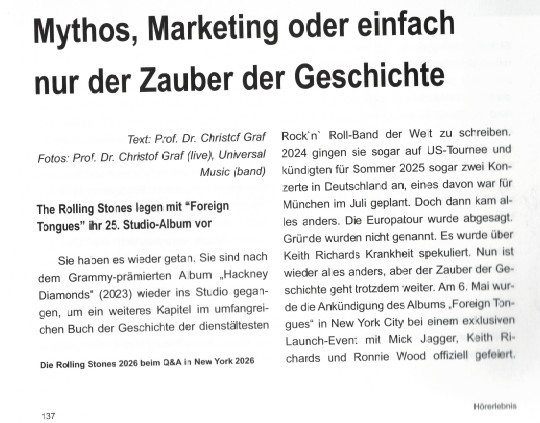
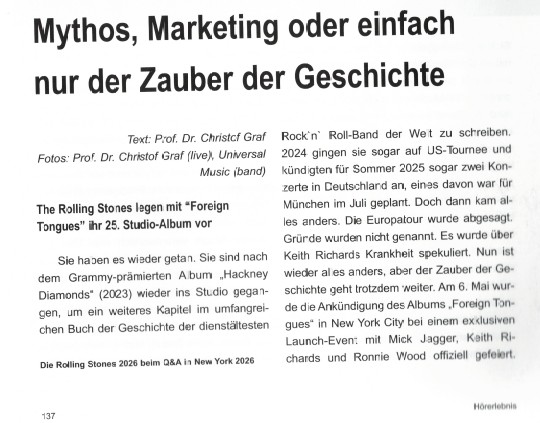
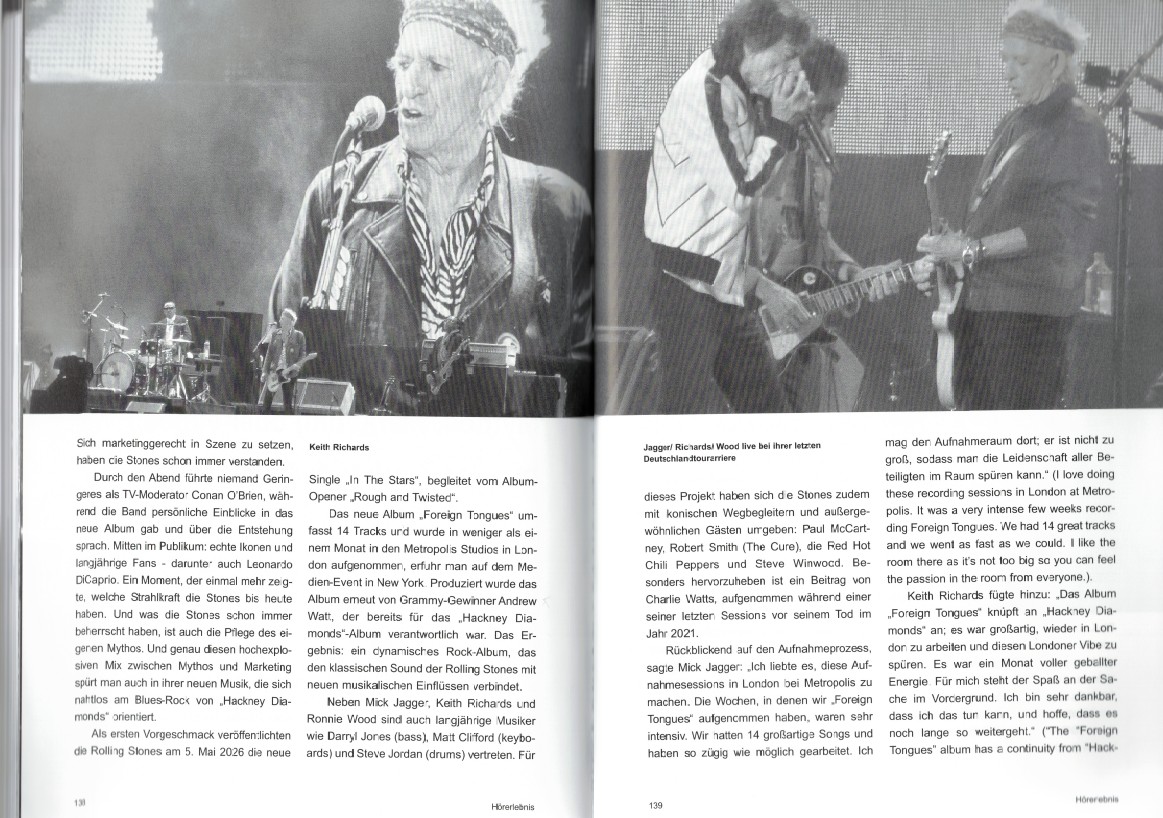
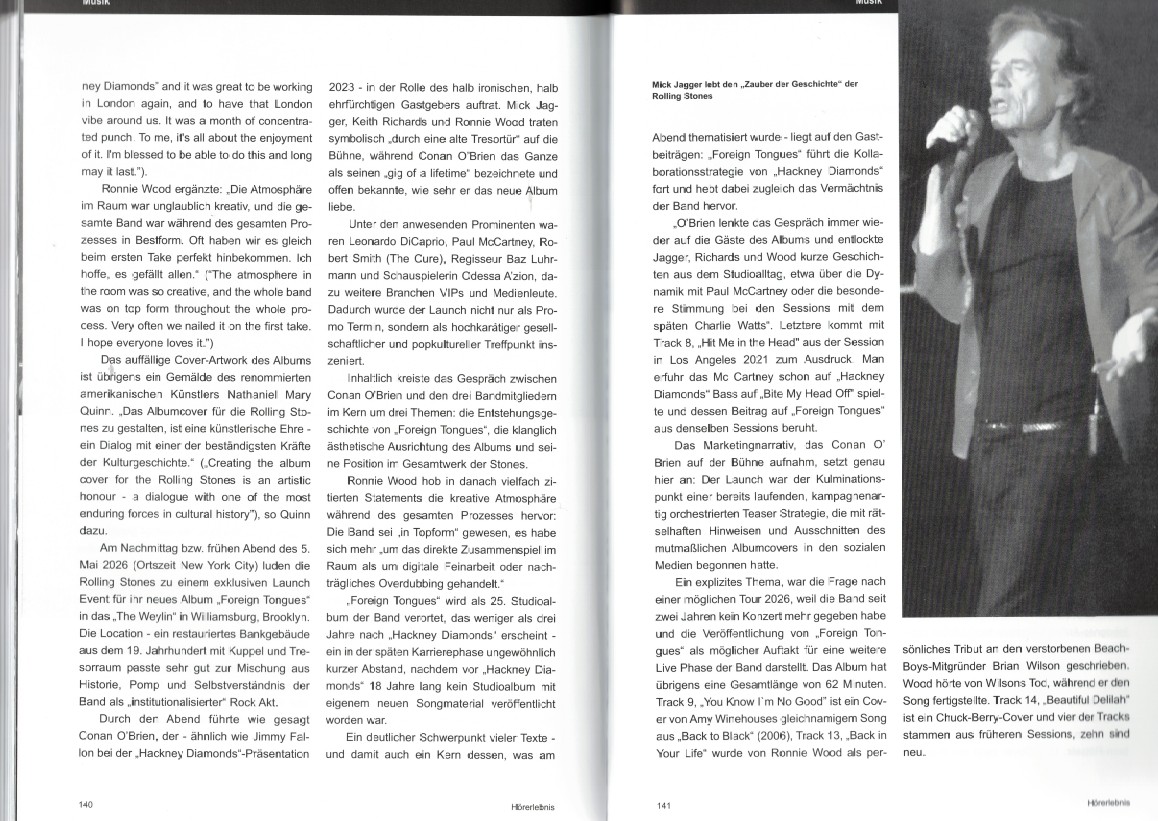
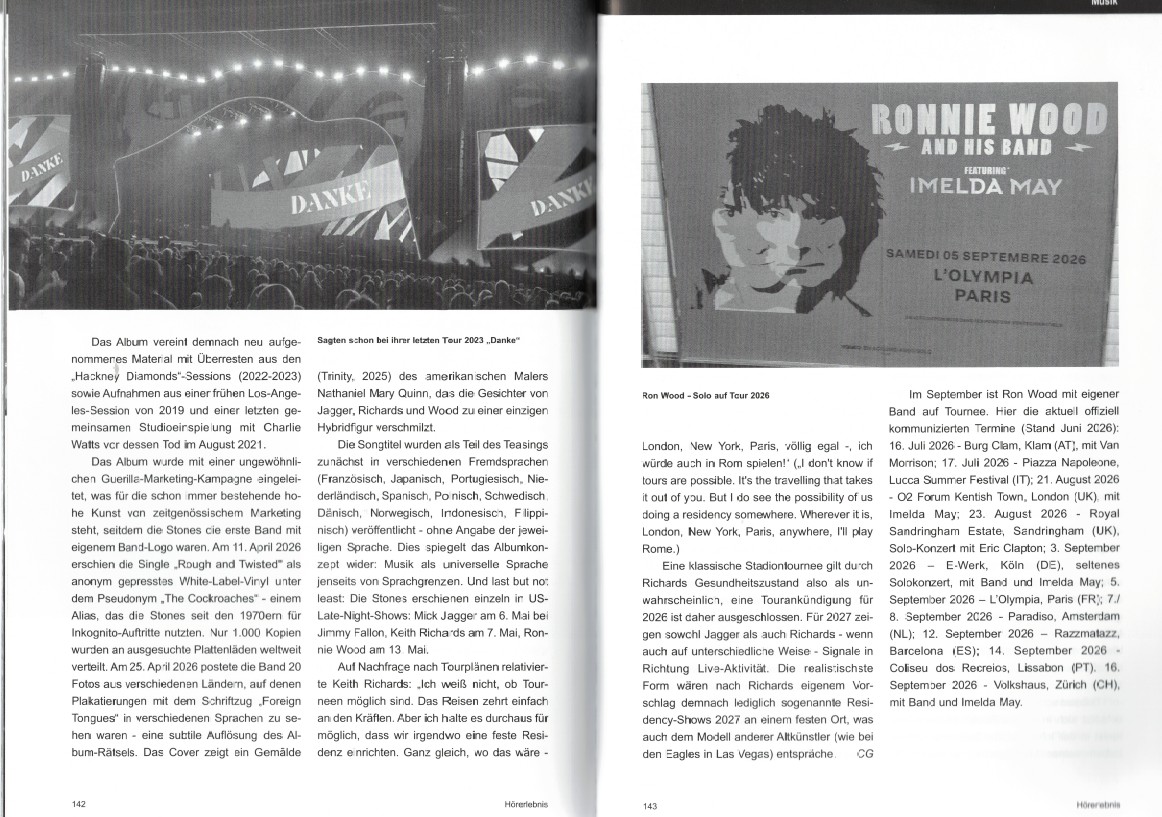
KW-33-2026: FOREIGN-TONGUES – Über das neue Album der Rolling Stones – MYTHOS, MARKETING ODER EINEFACH NUR DER ZAUBER DER GESCHICHTE – von Christof Graf, im HÖRERLEBNIS-MAGAZIN No. 136 S. 136-144
KW-33-2026: BE KIND – Der ultimative LeonardCohen-Podcast – Staffel 1, Folge 10 – TEACHERS by Leonard Cohen
MORE INFOS ABOUT THE LEONARDCOHEN-PODCAST:
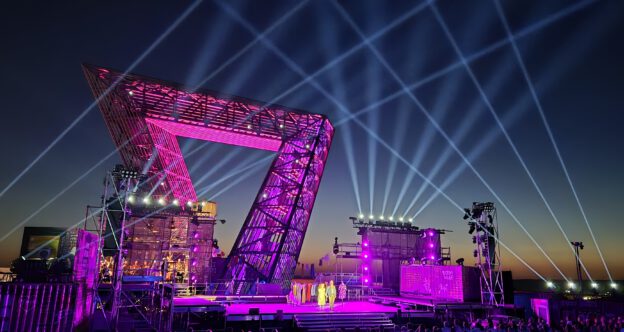
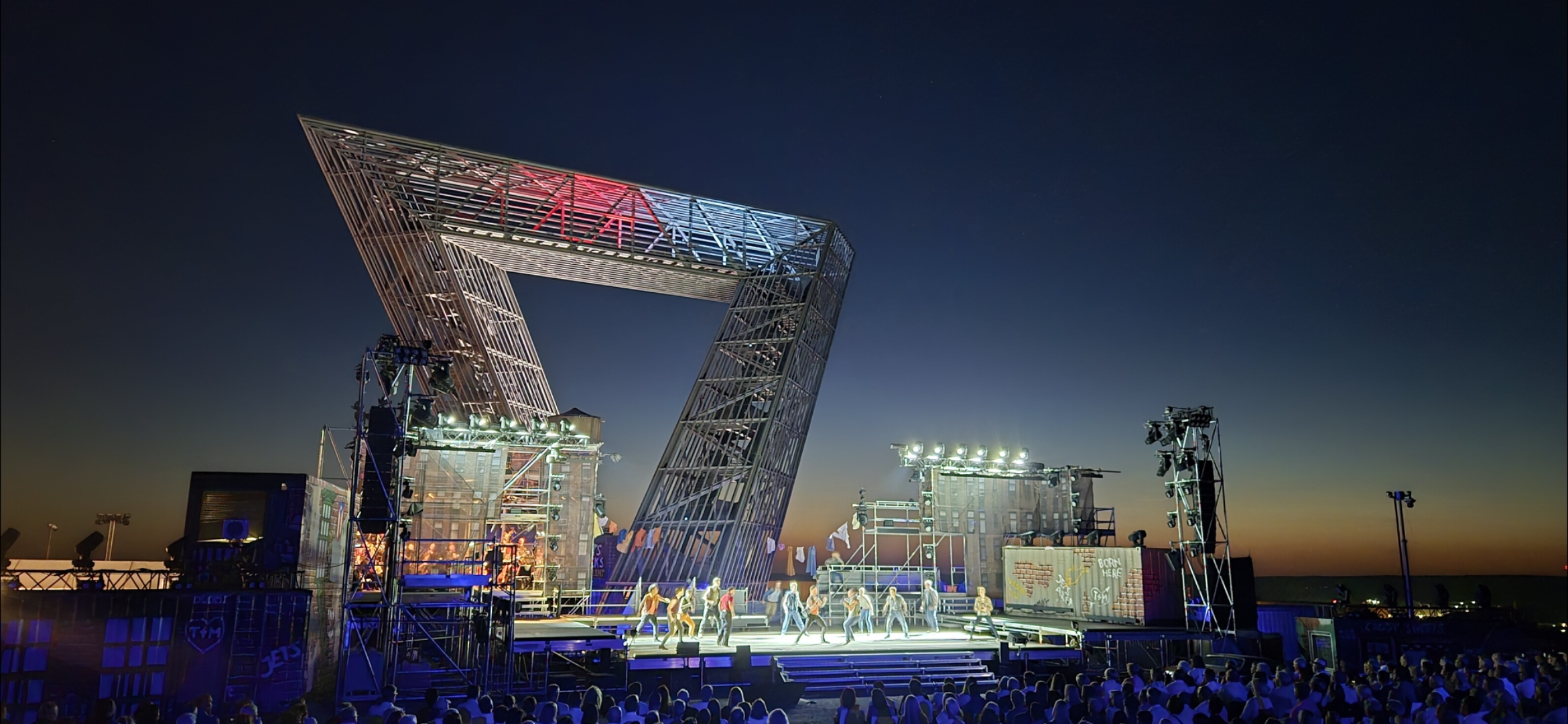
KW-33-2026: Polygon mal anders …

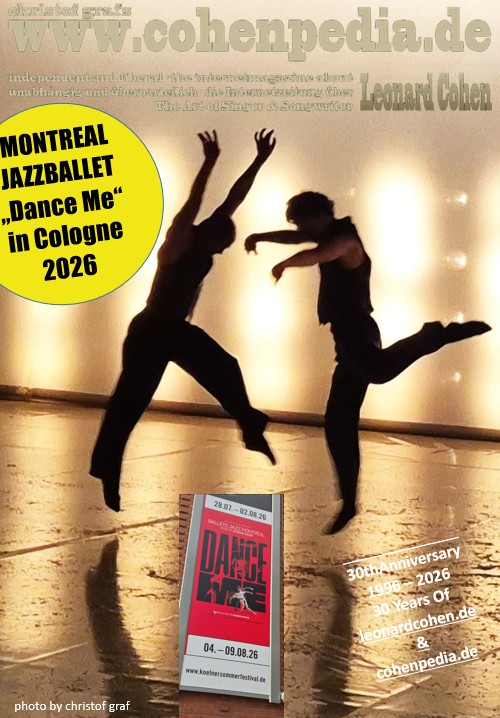
KW-32-2026: Die Verwandlung von Leonard Cohens Lieder in Tanz – Das “Ballets Jazz Montréal” in der Kölner Philharmonie – Eine Review von „Dance Me – Music by Leonard Cohen“ (dt. version)
„Dance Me – Music by Leonard Cohen“
Die Verwandlung von Leonard Cohens Lieder in Tanz – Text & Fotos von Christof graf (Cohenpedia)
Das “Ballets Jazz Montréal” in der Kölner Philharmonie
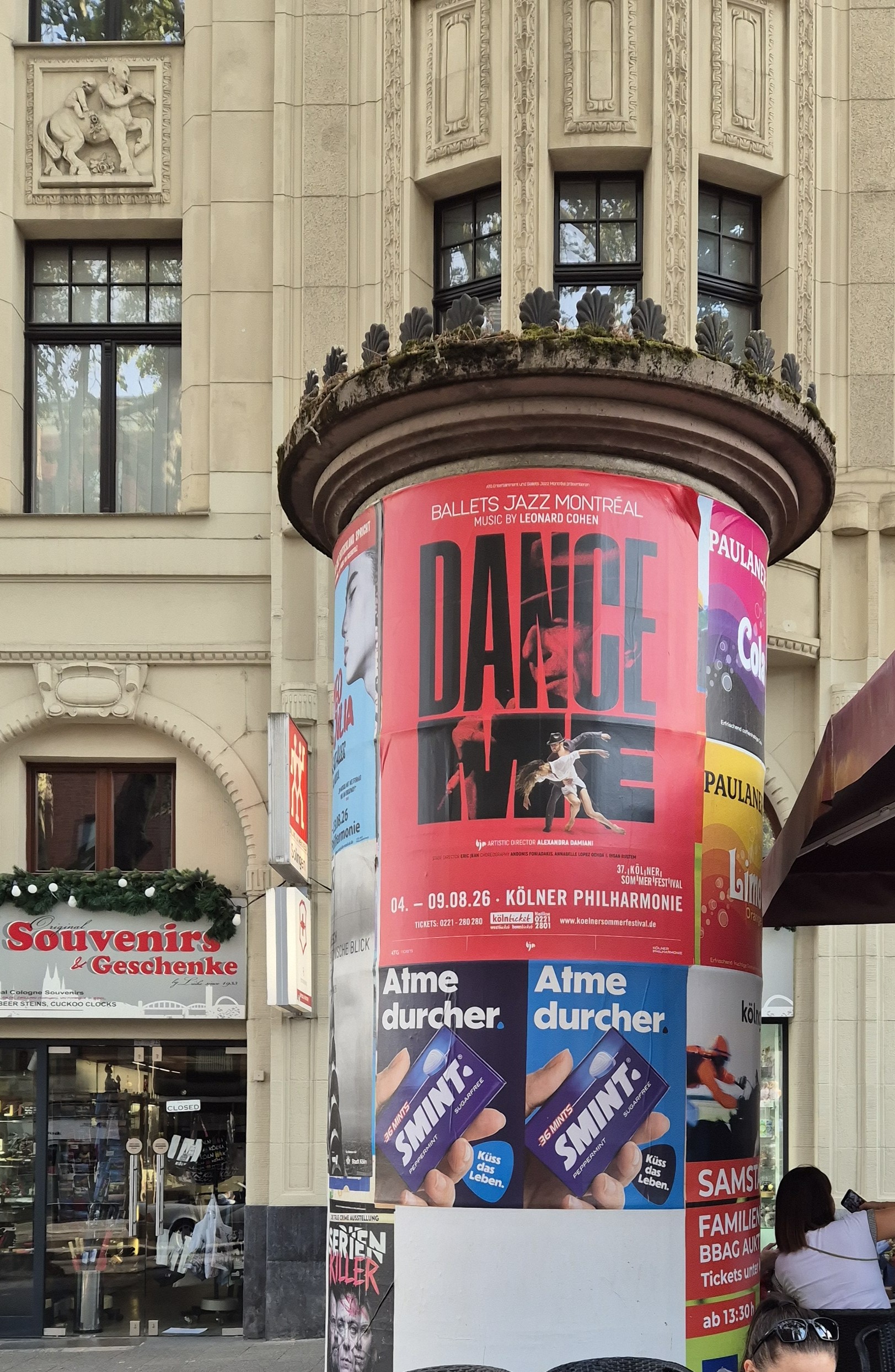
Mit „Dance Me – Music by Leonard Cohen“ bringt Ballets Jazz Montréal im August 2026 ein außergewöhnliches Zusammenspiel von Tanz, Musik, Licht, Video und Theater in die Kölner Philharmonie. Die Produktion, die 2017 in Montréal uraufgeführt wurde und zu Lebzeiten von Leonard Cohen von ihm persönlich gebilligt wurde, versucht nicht, das Leben des kanadischen Singer-Songwriters nachzuerzählen. Stattdessen übersetzt sie seine Themen – Liebe, Begehren, Einsamkeit, Alter, Verlust, Spiritualität und Tod – in Bewegung. Konzipiert wurde der Abend von Louis Robitaille, die Dramaturgie und Regie stammen von Éric Jean; choreografiert wurde er von Andonis Foniadakis, Annabelle Lopez Ochoa und Ihsan Rustem.
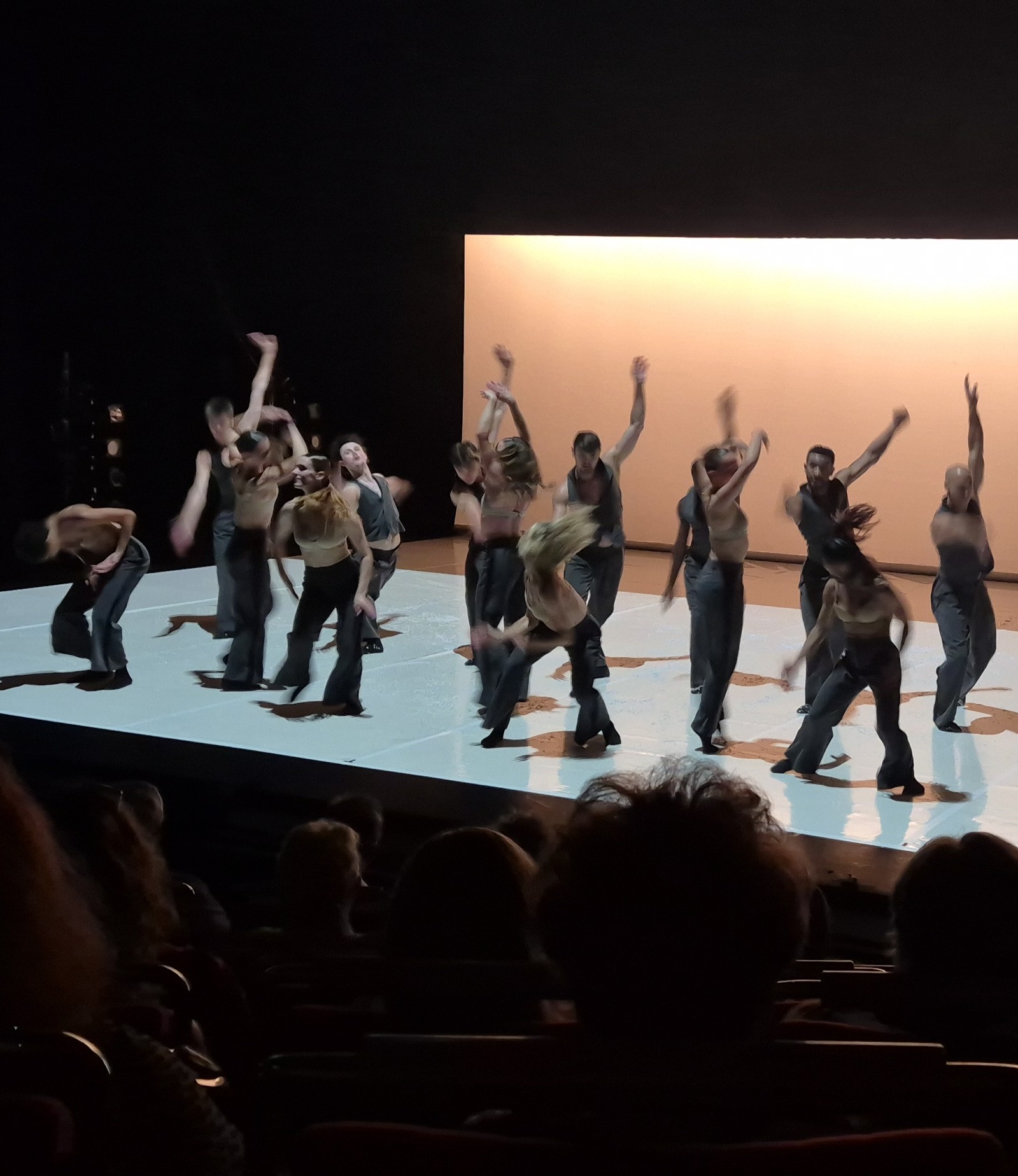
Gerade darin liegt die große Stärke von „Dance Me“: Cohen wird nicht illustriert, sondern körperlich interpretiert. Die rund 75 bis 80 Minuten dauernde, pausenlose Produktion ist in fünf große Lebensphasen beziehungsweise „Jahreszeiten“ gegliedert. Die 16 musikalischen Stationen bilden dabei keine klassische Handlung, sondern eher ein Mosaik menschlicher Erfahrungen. Für die Kölner Fassung ist folgende Reihenfolge dokumentiert: „Here It Is“, „Lover, Lover, Lover“, „Dance Me to the End of Love“, „Boogie Street“, „Steer Your Way“, „Everybody Knows“, „Tower of Song“, „So Long, Marianne“, „A Thousand Kisses Deep“, „Suzanne“, „Famous Blue Raincoat“, „Treaty“, „First We Take Manhattan“, „It Seemed the Better Way“, „Hallelujah“ und „Treaty Reprise“.
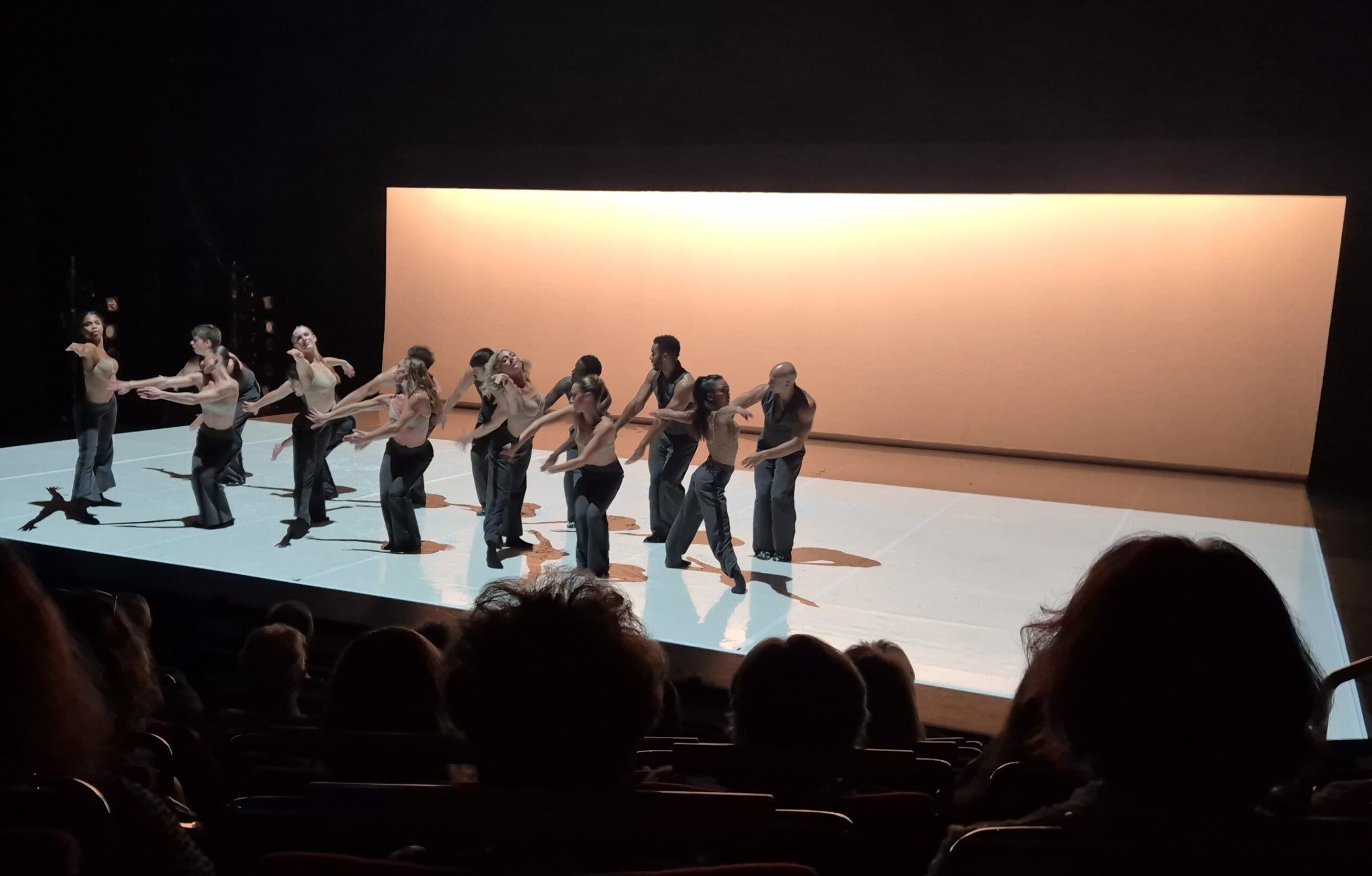
Leonard Cohens Lieder leben nicht von Überschwang, sondern von jener eigentümlichen Schwere, die entsteht, wenn ein Mensch über Liebe spricht und dabei den Tod schon mitdenkt. Cohens große Themen waren das Begehren und sein Scheitern, der Glaube und sein Verlust, die Schönheit des Körpers und dessen Vergänglichkeit. Ausgerechnet daraus einen Ballettabend zu machen, könnte leicht in dekorative Melancholie oder sentimentale Verehrung münden. Ballets Jazz Montréal entgeht dieser Gefahr in „Dance Me – Music by Leonard Cohen“ fast vollständig. In der Kölner Philharmonie wird Cohens Musik nicht illustriert, sondern körperlich befragt. Der Abend fragt nicht: Wie sieht „Hallelujah“ aus? Sondern: Was geschieht mit einem Körper, der liebt, zweifelt, altert, sich erinnert und schließlich loslassen muss? – Darin liegt die Intelligenz dieser Produktion. Louis Robitaille konzipierte „Dance Me“, Éric Jean verantwortet Dramaturgie und Regie, die Choreografien stammen von Andonis Foniadakis, Annabelle Lopez Ochoa und Ihsan Rustem. Cohen hatte dem Projekt noch zu Lebzeiten zugestimmt. Das Ergebnis ist weder Musical noch Biografie, weder klassisches Handlungsballett noch bloße Greatest-Hits-Revue. Es ist eher ein choreografisches Requiem – allerdings eines, das den Körper feiert, bevor es von seiner Endlichkeit erzählt.
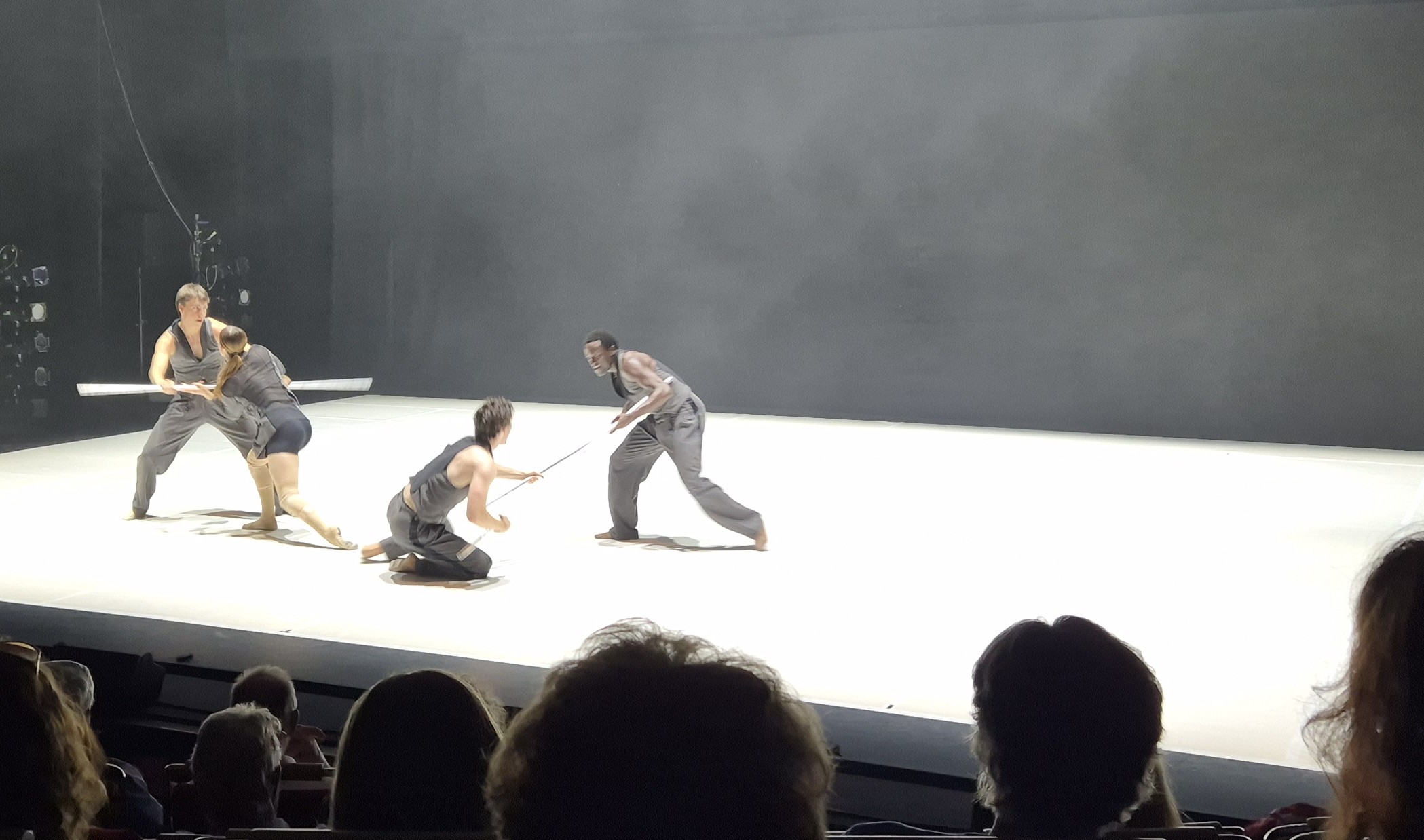
Schon „Here It Is“ setzt den Grundton. Aus der Dunkelheit treten Körper hervor, zunächst weniger als Figuren denn als Erscheinungen. Die Bewegung ist tastend, beinahe rituell. Es entsteht jener Schwebezustand, den Cohen so gut kannte: zwischen Diesseits und Jenseits, Gewissheit und Zweifel. Die Tänzer scheinen nicht einfach eine Bühne zu betreten; sie werden gleichsam in eine Welt hineingeboren.
Mit „Lover, Lover, Lover“ kommt das Begehren. Die Körper finden zueinander, ohne dauerhaft zueinanderzufinden. Hände greifen, Partner werden gehalten, gehoben und wieder losgelassen. Liebe erscheint hier nicht als harmonischer Endzustand, sondern als permanente Bewegung auf einen anderen Menschen zu.
Das titelgebende „Dance Me to the End of Love“ macht daraus das Zentrum des Abends. Der Titel ist längst zum romantischen Gemeinplatz geworden, doch die Choreografie gibt ihm seine Unheimlichkeit zurück. „Bis ans Ende der Liebe“ bedeutet eben auch: bis ans Ende. Der Tanz wird zum Versprechen, das seine eigene Vergänglichkeit bereits kennt. Die Partnerarbeit besitzt eine große Zärtlichkeit, aber keine Sicherheit. Ein Körper fängt den anderen auf; im nächsten Augenblick könnte er ihn verlieren.
Vielleicht kommt man Cohen körperlich kaum näher.
Dass „Dance Me“ nicht in dieser elegischen Stimmung verharrt, zeigt „Boogie Street“. Die Bewegung wird kantiger, weltlicher, beinahe nervös. Das Private öffnet sich zur Straße, zur Gesellschaft, zur Unordnung des Lebens. „Steer Your Way“ verschärft diese Perspektive, ehe „Everybody Knows“ einen der stärksten gesellschaftlichen Momente des Abends bildet. Cohens bitteres „Everybody knows“ ist schließlich das Gegenteil naiver Empörung: Alle wissen Bescheid, und dennoch geht alles weiter.
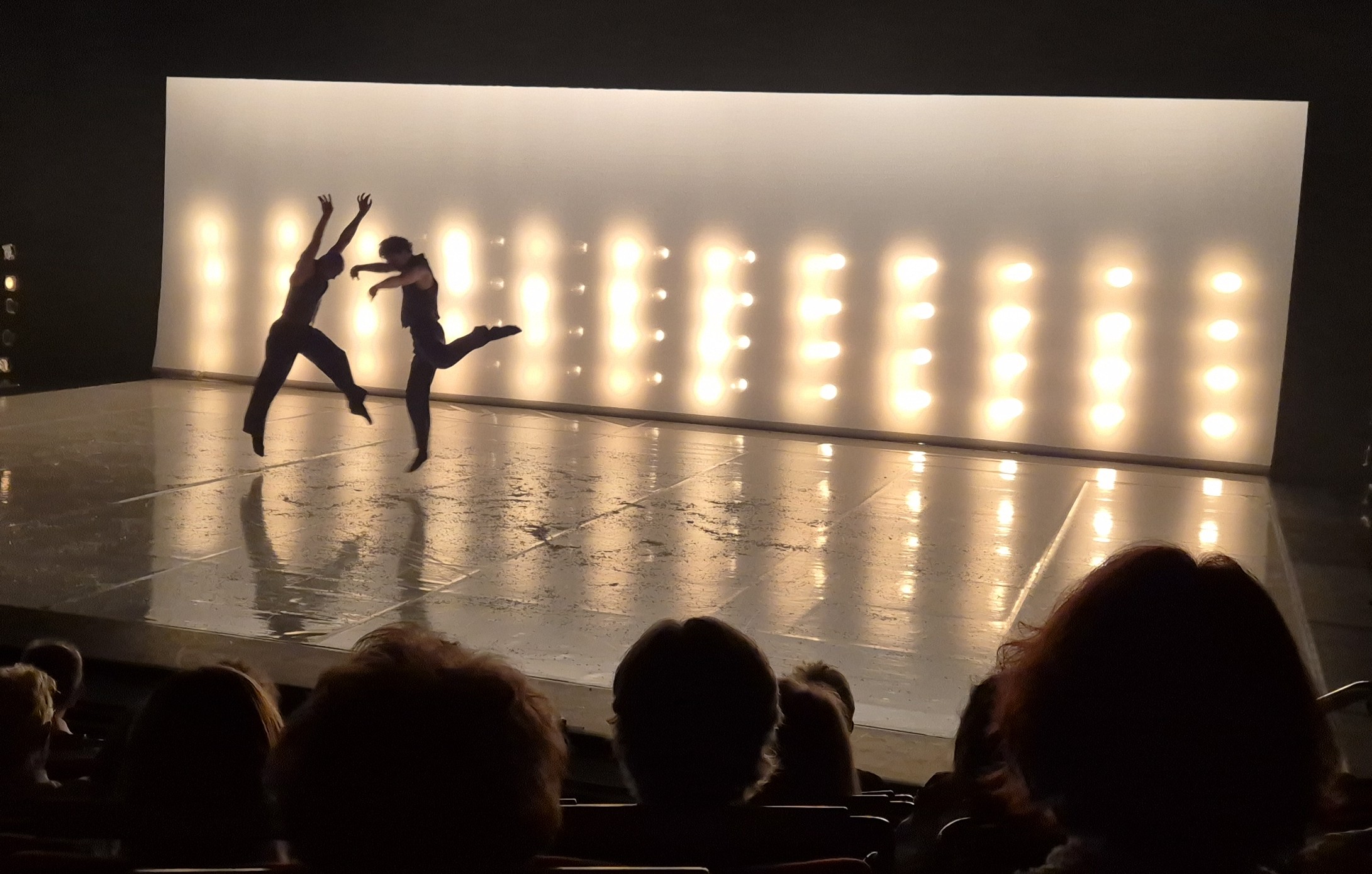
Genau das findet die Choreografie in der Gruppe. Die Tänzer funktionieren plötzlich wie Teile eines Systems. Bewegungen wiederholen sich, Körper ordnen sich ein, lösen sich heraus und werden wieder eingefangen. Individualität und Konformität geraten aneinander. Der Mensch ist hier nicht nur Liebender, sondern gesellschaftliches Wesen – beteiligt an einer Welt, deren Verlogenheit er zugleich durchschaut.
„Tower of Song“ erlaubt danach Luft. Cohens Selbstironie, ohne die sein Pathos unerträglich werden könnte, findet eine spielerischere körperliche Form. Die Tänzer zeigen Haltung, Rhythmus, beinahe Koketterie. Das ist dramaturgisch klug. Denn ein Abend, der Cohen ausschließlich als Hohepriester der Schwermut behandelte, würde gerade den Witz unterschlagen, mit dem dieser Mann seine eigene Düsternis immer wieder unterlief.
Mit „So Long, Marianne“ kehrt die Intimität zurück. Zoey Andersons Gesang verändert dabei das Verhältnis von Körper und Musik. Plötzlich steht die Stimme nicht mehr nur als Aufnahme über dem Tanzraum, sondern kommt aus einem Menschen, der selbst Teil dieses Raumes ist. Abschied wird dadurch unmittelbarer. „So Long, Marianne“ wird nicht als großes Trennungsdrama inszeniert. Gerade das macht es bewegend. Manche Beziehungen enden nicht mit einem Knall. Sie werden Erinnerung. Es ist einer der berührendsten Momente des Abends. In dem Moment wird die Grenze zwischen Tanz und Konzert bewusst aufgehoben. „So Long, Marianne“ erhält dadurch eine besondere Intimität: Der Tanz tritt teilweise zurück, und die Stimme wird selbst zum emotionalen Körper des Stücks. Abschied wird nicht als dramatischer Zusammenbruch dargestellt, sondern als ambivalenter Zustand zwischen Trauer, Erinnerung und Dankbarkeit.
„A Thousand Kisses Deep“ treibt diesen Gedanken weiter ins Traumhafte. Die Choreografie löst ihre Konturen. Die Tänzer fallen, schweben, verschwinden ineinander. Der Kuss ist hier längst keine konkrete Geste mehr. Er ist Erinnerung an Intimität – etwas, das im Körper gespeichert bleibt, obwohl der Augenblick selbst verschwunden ist.
Und dann „Suzanne“. Kaum eine Figur Cohens ist stärker von Projektionen überlagert. Die Produktion widersteht der Versuchung, daraus ein kleines Liebesdrama zu machen. Suzanne bleibt vielmehr das, was sie in Cohens Lied immer war: zugleich Frau und Vorstellung, körperlich nah und geistig unerreichbar. Der Tanz macht diese Unverfügbarkeit sichtbar. Nähe bedeutet nicht Besitz.
„Famous Blue Raincoat“ gehört folgerichtig zu den melancholischsten Momenten. Beziehungen sind nun nicht mehr Gegenwart, sondern Geschichte. Bewegungen beginnen, als wollten sie eine Begegnung wiederholen, die längst vorbei ist. Die Tänzer erreichen einander und verfehlen sich zugleich. Der Raum zwischen zwei Körpern wird plötzlich wichtiger als die Körper selbst.
In „Treaty“ wird daraus der Wunsch nach Versöhnung. Cohen hat das Liebesverhältnis immer wieder als eine Form von Verhandlung verstanden: zwischen Freiheit und Bindung, Schuld und Vergebung, Körper und Geist. Die Choreografie findet dafür Balanceakte. Einer trägt das Gewicht des anderen. Einer gibt nach, damit der andere stehen kann. Es ist ein schönes Bild für jede ernsthafte Beziehung: Gleichgewicht ist nichts, was man besitzt. Man muss es fortwährend herstellen.
Dann bricht „First We Take Manhattan“ in diesen Abend ein.
Die Tänzer verwandeln sich. Wo zuvor Verletzlichkeit herrschte, regieren plötzlich Kraft, Präzision und Angriff. Die Gruppe marschiert nicht, und doch hat ihre Bewegung etwas von einer Eroberungsmaschine. Macht wird körperlich. Ehrgeiz wird Rhythmus. Die tänzerische Virtuosität des Ensembles tritt hier besonders offen hervor – Sprünge, schnelle Richtungswechsel und komplexe Formationen besitzen eine fast aggressive Eleganz.
Es wäre leicht, sich von dieser technischen Brillanz verführen zu lassen. Doch die Choreografie setzt ihr einen bitteren Unterton entgegen. Wer Manhattan erobert, hat noch lange nicht sich selbst erobert.
„It Seemed the Better Way“ wirkt danach wie die Ernüchterung eines alten Mannes. Die Bewegung verliert ihren demonstrativen Gestus. Sie wird kleiner, konzentrierter. Gerade diese Reduktion ist stark. Der späte Cohen spricht nicht mehr mit der Selbstgewissheit des jungen Liebhabers. Er spricht als jemand, der gelernt hat, dass weder Religion noch Liebe noch Kunst endgültige Antworten liefern.
Dann kommt das Stück, das eigentlich nicht mehr zu retten sein dürfte: „Hallelujah“.
Zu viele Castingshows, Hochzeiten, Beerdigungen und pathetische Coverversionen haben aus Cohens widersprüchlichem Lied eine universelle Gefühlstapete gemacht. Ballets Jazz Montréal widersteht erfreulicherweise der Versuchung, noch mehr Pathos daraufzulegen. Zoey Anderson und DaMond LeMonte Garner singen, während die Choreografie sich zurücknimmt.
Das ist die richtige Entscheidung.
Denn Cohens „Hallelujah“ war nie das Lied einer ungebrochenen Erlösung. Es handelt vom Scheitern und davon, trotzdem noch ein Halleluja sagen zu können. Vom Glauben nach dem Verlust der Gewissheit. Von der Liebe nach der Enttäuschung. Von Schönheit, obwohl man weiß, dass sie vergeht.
Die Körper auf der Bühne müssen dazu nichts mehr beweisen. Sie sind einfach da.
Das abschließende „Treaty Reprise“ führt den Abend deshalb nicht zu einem triumphalen Ende. Es führt ihn zurück zum Wunsch nach Verständigung. Vielleicht gibt es am Ende keinen Sieg, sondern lediglich die Möglichkeit, mit dem anderen – und mit sich selbst – Frieden zu schließen.
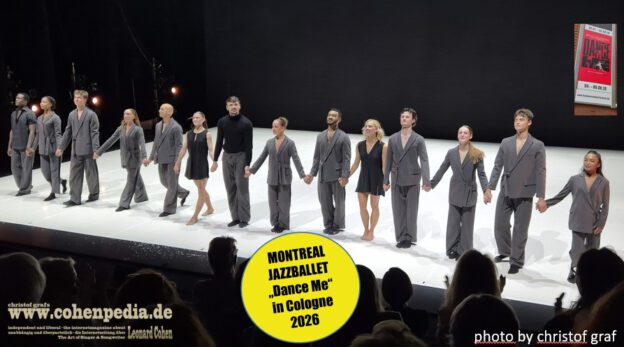
Das Ensemble trägt diese Idee mit beeindruckender körperlicher Präsenz. Zur für 2026 veröffentlichten Besetzung gehören Zoey Anderson, Gustavo Barros, Millie Brinck-Dubuc, Yosmell Calderon Mejias, Marcel Cavaliere, Kyle Davis, Jasmine Heart Cruz, Shanna Irwin Calderon, Miu Kato, DaMond LeMonte Garner, Zack Preece, Madelaine Salhany und Silje Vereide; Troy Atamanuk wird als Intern geführt. Besonders Yosmell Calderon Mejias besitzt jene selbstverständliche Bühnenautorität, bei der technische Sicherheit nicht mehr als Technik sichtbar wird. Anderson und Garner wiederum erweitern als singende Tänzer die Ausdrucksmöglichkeiten des Ensembles.
Doch es wäre falsch, aus diesem Abend einzelne Stars herauszuschneiden. Seine eigentliche Hauptfigur ist die Gemeinschaft der Körper. Immer wieder entstehen Paare, Trios und Gruppen, nur um sich erneut aufzulösen. Ein Mensch tritt hervor und verschwindet wieder in der Menge. Das passt zu Cohen: Das Individuum verlangt verzweifelt nach Einzigartigkeit und weiß doch, dass seine elementaren Erfahrungen – Liebe, Eifersucht, Verlust, Alter und Tod – von Millionen anderen geteilt werden.
Auch ästhetisch besitzt „Dance Me“ große Geschlossenheit. Dunkelheit, Gegenlicht, Projektionen und reduzierte Kostüme schaffen einen Raum, der weniger Schauplatz als Bewusstseinslandschaft ist. Manchmal sieht man eher Schatten als Menschen. Manchmal scheint ein Körper nur für Sekunden aus dem Dunkel aufzutauchen.
Schöner lässt sich Vergänglichkeit kaum inszenieren.
Ganz ohne Einwand bleibt der Abend dennoch nicht. Sechzehn musikalische Stationen in knapp achtzig Minuten erzeugen eine enorme Dichte. Nicht jede choreografische Idee erhält die Zeit, die sie verdient hätte. Manche Motive – Fallen, Auffangen, Umkreisen, Trennen – kehren so häufig wieder, dass aus poetischer Wiederholung gelegentlich choreografische Konvention wird. Und bisweilen ist die visuelle Schönheit des Abends so vollkommen, dass man sich einen Riss in dieser Perfektion wünscht: etwas Hässliches, Sperriges, wirklich Verstörendes.
Denn Cohen war nicht nur elegant melancholisch. Er konnte obszön, politisch, bitter und grausam sein. „Dance Me“ liebt seinen Cohen gelegentlich etwas zu sehr.
Doch das ist ein Einwand gegen einen außergewöhnlich gelungenen Abend. Entscheidend ist, dass Ballets Jazz Montréal der Musik nicht unterwürfig begegnet. Die Choreografen illustrieren keinen Heiligen Leonard. Sie nehmen seine Gedanken und setzen sie einer anderen Kunstform aus.
Dabei geschieht etwas Bemerkenswertes: Man beginnt Cohens Musik anders zu hören, weil man sie gesehen hat.
Der Körper erweist sich dabei als das vielleicht geeignetste Instrument für diese Lieder. Denn alles, wovon Cohen geschrieben hat, geschieht letztlich mit ihm: Wir begehren mit dem Körper. Wir berühren und werden berührt. Wir tragen andere und lassen sie fallen. Wir altern. Wir verlieren. Und irgendwann verschwindet genau der Körper, der all dies erfahren hat.
Darum heißt dieser Abend „Dance Me to the End of Love“ und nicht bloß „Dance with Me“.
Tanz mich bis zum Ende.
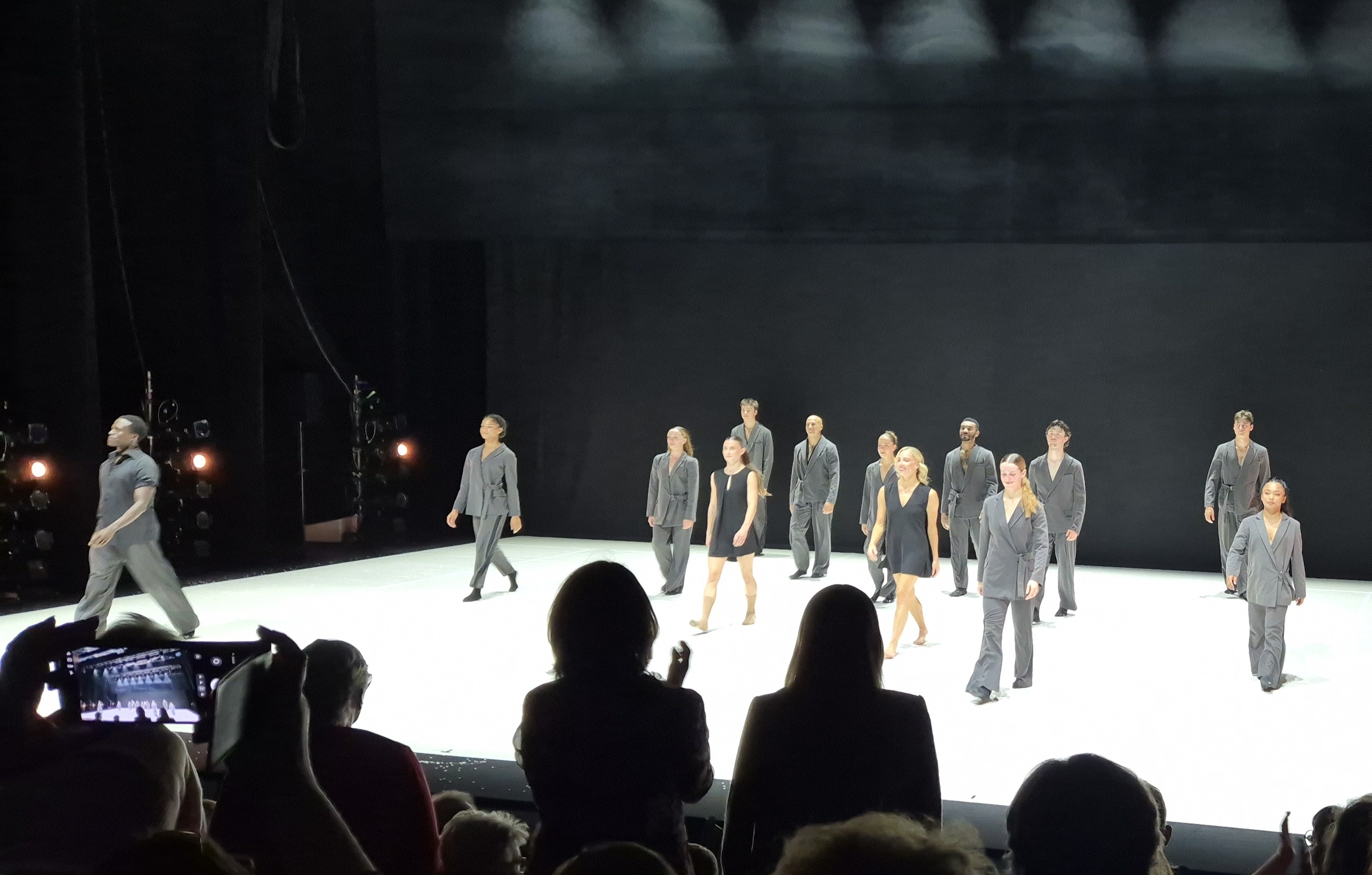
Das ist Bitte und Liebeserklärung, aber ebenso Todesbewusstsein. Ballets Jazz Montréal versteht diesen kleinen Unterschied. Und aus ihm gewinnt die Produktion ihre eigentliche Größe.
Am Ende bleibt kein großes choreografisches Ausrufezeichen. Es bleibt etwas viel Cohenhafteres: ein Zweifel, eine Erinnerung, vielleicht eine Art Trost. Das letzte Wort gehört nicht der Gewissheit, sondern der Versöhnung.
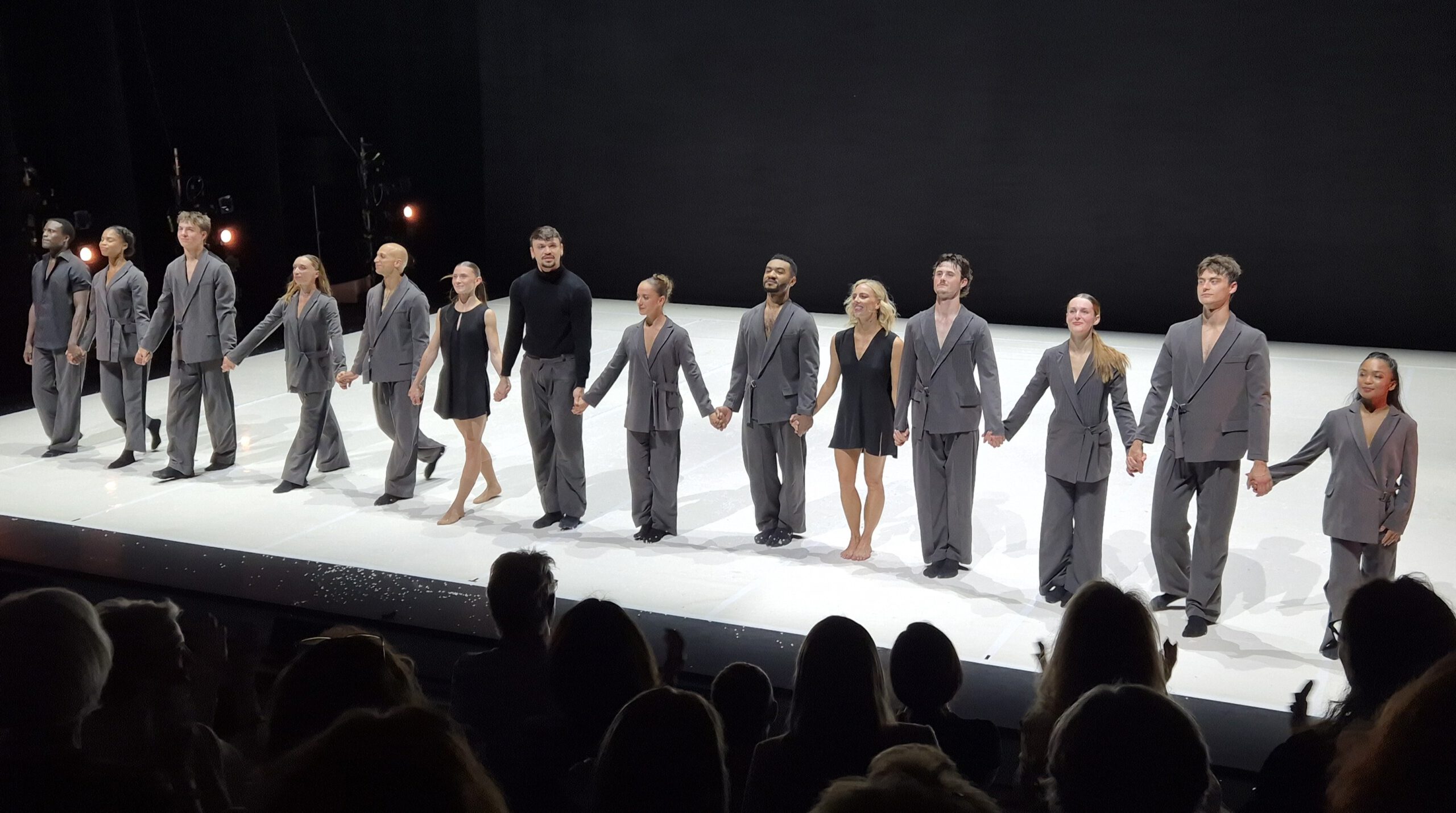
Und irgendwo zwischen einem gefallenen Körper, einer ausgestreckten Hand und einem letzten „Hallelujah“ begreift man, was dieser Abend im besten Moment vermag: Er tanzt nicht zu Leonard Cohen.

KW-32-2026: The Transformation of Leonard Cohen’s Songs into Dance – The „Ballets Jazz Montréal“ at the Cologne Philharmonic Hall 2026 – „Dance Me – Music by Leonard Cohen“ (engl. version)
„Dance Me – Music by Leonard Cohen“ (engl. version)
The Transformation of Leonard Cohen’s Songs into Dance
– by Christof Graf/Cohenpedia (photos: christof grag)
The „Ballets Jazz Montréal“ at the Cologne Philharmonic Hall
With „Dance Me – Music by Leonard Cohen“, Ballets Jazz Montréal will bring an extraordinary interplay of dance, music, light, video and theatre to the Cologne Philharmonic in August 2026. The production, which premiered in Montréal in 2017 and was personally approved by Leonard Cohen during his lifetime, does not attempt to retell the life of the Canadian singer-songwriter. Instead, she translates his themes – love, desire, loneliness, old age, loss, spirituality and death – into movement. The evening was conceived by Louis Robitaille, the dramaturgy and direction are by Éric Jean; it was choreographed by Andonis Foniadakis, Annabelle López Ochoa and Ihsan Rustem.
This is precisely where the great strength of „Dance Me“ lies: Cohen is not illustrated, but interpreted physically. The non-stop production, which lasts around 75 to 80 minutes, is divided into five major phases of life or „seasons“. The 16 musical stations do not form a classical plot, but rather a mosaic of human experiences. For the Cologne version, the following order is documented: „Here It Is“, „Lover, Lover, Lover“, „Dance Me to the End of Love“, „Boogie Street“, „Steer Your Way“, „Everybody Knows“, „Tower of Song“, „So Long, Marianne“, „A Thousand Kisses Deep“, „Suzanne“, „Famous Blue Raincoat“, „Treaty“, „First We Take Manhattan“, „It Seemed the Better Way“, „Hallelujah“ and „Treaty Reprise“.
Leonasrd Cohen’s songs do not live from exuberance, but from that peculiar heaviness that arises when a person talks about love and already thinks about death. Cohen’s great themes were desire and its failure, faith and its loss, the beauty of the body and its transience. To make a ballet evening out of this, of all things, could easily lead to decorative melancholy or sentimental admiration. Ballets Jazz Montréal almost completely avoids this danger in „Dance Me – Music by Leonard Cohen“. In the Cologne Philharmonic, Cohen’s music is not illustrated, but physically questioned. The evening does not ask: What does „Hallelujah“ look like? But: What happens to a body that loves, doubts, ages, remembers and finally has to let go? – Therein lies the intelligence of this production. Louis Robitaille conceived „Dance Me“, Éric Jean is responsible for dramaturgy and direction, the choreographies are by Andonis Foniadakis, Annabelle Lopez Ochoa and Ihsan Rustem. Cohen had agreed to the project during his lifetime. The result is neither a musical nor a biography, neither a classical narrative ballet nor a mere greatest hits revue. It is more of a choreographic requiem – but one that celebrates the body before it tells of its finiteness.
„Here It Is“ already sets the tone. Bodies emerge from the darkness, at first less as figures than as apparitions. The movement is tentative, almost ritualistic. The result is that state of limbo that Cohen knew so well: between this world and the hereafter, certainty and doubt. The dancers do not seem to simply enter a stage; they are born, as it were, into a world.
With „Lover, Lover, Lover“ comes desire. The bodies find each other without finding each other permanently. Grasp hands, partners are held, lifted and let go again. Love does not appear here as a harmonious final state, but as a permanent movement towards another person.
The eponymous „Dance Me to the End of Love“ makes it the center of the evening. The title has long since become a romantic commonplace, but the choreography gives it back its uncanniness. „To the end of love“ also means: to the end. Dance becomes a promise that already knows its own transience. Partner work has a great tenderness, but no security. One body catches the other; the next moment he might lose it.
Maybe you can hardly get closer to Cohen physically.
„Boogie Street“ shows that „Dance Me“ does not remain in this elegiac mood. The movement becomes edgier, more secular, almost nervous. The private opens up to the street, to society, to the disorder of life. „Steer Your Way“ intensifies this perspective, before „Everybody Knows“ forms one of the strongest social moments of the evening. Cohen’s bitter „Everybody knows“ is, after all, the opposite of naïve indignation: everyone knows, and yet everything goes on.
This is exactly what the choreography finds in the group. The dancers suddenly function like parts of a system. Movements are repeated, bodies arrange themselves, detach themselves and are recaptured. Individuality and conformity clash. Here, man is not only a lover, but a social being – involved in a world whose mendacity he sees through at the same time.
„Tower of Song“ then allows air. Cohen’s self-irony, without which his pathos could become unbearable, finds a more playful physical form. The dancers show attitude, rhythm, almost coquetry. That’s dramaturgically clever. For an evening that treated Cohen exclusively as the high priest of melancholy would suppress precisely the wit with which this man repeatedly undermined his own gloom.
With „So Long, Marianne“, intimacy returns. Zoey Anderson’s singing changes the relationship between body and music. Suddenly, the voice is no longer just a recording above the dance room, but comes from a person who is himself part of this room. This makes farewell more immediate. „So Long, Marianne“ is not staged as a big separation drama. That’s exactly what makes it moving. Some relationships don’t end with a bang. They become memories. It is oneof the most touching moments of the evening. At that moment, the boundary between dance and concert is deliberately abolished. This gives „So Long, Marianne“ a special intimacy: the dance partially recedes and the voice itself becomes the emotional body of the piece. Farewell is not portrayed as a dramatic collapse, but as an ambivalent state between grief, remembrance and gratitude.
„A Thousand Kisses Deep“ pushes this thought further into the dreamlike. The choreography loosens its contours. The dancers fall, float, disappear into each other. The kiss has long since ceased to be a concrete gesture here. It is a memory of intimacy – something that remains stored in the body even though the moment itself has disappeared.
And then „Suzanne“. Hardly any other character in Cohen is more overlaid with projections. The production resists the temptation to turn it into a small love drama. Rather, Suzanne remains what she has always been in Cohen’s song: at once a woman and an imagination, physically close and mentally unattainable. Dance makes this unavailability visible. Closeness does not mean possession.
„Famous Blue Raincoat“ is consequently one of the most melancholic moments. Relationships are no longer the present, but history. Movements begin as if they wanted to repeat an encounter that is long gone. The dancers reach each other and miss each other at the same time. The space between two bodies suddenly becomes more important than the bodies themselves.
In „Treaty“, this becomes the desire for reconciliation. Cohen has always understood the love relationship as a form of negotiation: between freedom and commitment, guilt and forgiveness, body and mind. The choreography finds balancing acts for this. One carries the weight of the other. One gives way so that the other can stand. It’s a nice image for any serious relationship: balance is not something you own. It must be produced continuously.
Then „First We Take Manhattan“ breaks into this evening.
The dancers transform. Where vulnerability previously prevailed, power, precision and attack suddenly rule. The group does not march, and yet their movement has something of a conquest machine. Power becomes physical. Ambition becomes rhythm. The dance virtuosity of the ensemble is particularly evident here – jumps, rapid changes of direction and complex formations possess an almost aggressive elegance.
It would be easy to be seduced by this technical brilliance. But the choreography counters it with a bitter undertone. Whoever conquers Manhattan has by no means conquered himself.
„It Seemed the Better Way“ then seems like the disillusionment of an old man. The movement is losing its demonstrative gesture. She becomes smaller, more concentrated. It is precisely this reduction that is strong. The late Cohen no longer speaks with the self-assurance of a young lover. He speaks as someone who has learned that neither religion, nor love, nor art provide definitive answers.
Then comes the play that should actually be unsalvageable: „Hallelujah“.
Too many casting shows, weddings, funerals and pathetic cover versions have turned Cohen’s contradictory song into a universal wallpaper of emotions. Ballets Jazz Montréal fortunately resists the temptation to add even more pathos to it. Zoey Anderson and DaMond LeMonte Garner sing while the choreography takes a back seat.
This is the right decision.
Because Cohen’s „Hallelujah“ was never the song of unbroken redemption. It’s about failure and about being able to say a hallelujah anyway. Of faith after the loss of certainty. Of love after disappointment. Of beauty, although you know that it will pass.
The bodies on stage don’t have to prove anything anymore. They are simply there.
The concluding „Treaty Reprise“ therefore does not lead the evening to a triumphant end. It leads him back to the desire for understanding. Perhaps in the end there is no victory, but only the possibility of making peace with the other – and with oneself.
The ensemble carries this idea with impressive physical presence. The cast released for 2026 includes Zoey Anderson, Gustavo Barros, Millie Brinck-Dubuc, Yosmell Calderon Mejias, Marcel Cavaliere, Kyle Davis, Jasmine Heart Cruz, Shanna Irwin Calderon, Miu Kato, DaMond LeMonte Garner, Zack Preece, Madelaine Salhany, and Silje Vereide; Troy Atamanuk is listed as Intern. Yosmell Calderon Mejias in particular possesses that self-evident stage authority in which technical safety is no longer visible as technology. Anderson and Garner, on the other hand, expand the expressive possibilities of the ensemble as singing dancers.
But it would be wrong to cut individual stars out of this evening. Its real main character is the community of bodies. Again and again, couples, trios and groups emerge, only to dissolve again. A person steps forward and disappears again into the crowd. This suits Cohen: the individual desperately craves uniqueness and yet knows that his elementary experiences – love, jealousy, loss, old age and death – are shared by millions of others.
„Dance Me“ also has great aesthetic coherence. Darkness, backlighting, projections and reduced costumes create a space that is less a scene than a landscape of consciousness. Sometimes you see shadows rather than people. Sometimes a body seems to emerge from the darkness only for seconds.
Transience can hardly be staged more beautifully.
Nevertheless, the evening is not entirely without objections. Sixteen musical stations in just under eighty minutes create an enormous density. Not every choreographic idea gets the time it deserves. Some motifs – falling, catching, circling, separating – recur so frequently that poetic repetition occasionally becomes choreographic convention. And at times the visual beauty of the evening is so complete that you wish there was a crack in this perfection: something ugly, unwieldy, really disturbing.
Because Cohen was not only elegantly melancholic. It could be obscene, political, bitter and cruel. „Dance Me“ occasionally loves his Cohen a little too much.
But that is an objection to an extraordinarily successful evening. It is crucial that Ballets Jazz Montréal does not approach the music in a submissive way. The choreographers do not illustrate Saint Leonard. They take his thoughts and expose them to another art form.
In the process, something remarkable happens: you start to hear Cohen’s music differently because you have seen it.
The body proves to be perhaps the most suitable instrument for these songs. Because everything Cohen wrote about ultimately happens to him: We desire with the body. We touch and are touched. We carry others and drop them. We age. We lose. And at some point, the very body that experienced all this disappears.
That’s why this evening is called „Dance Me to the End of Love“ and not just „Dance with Me“.
Dance me to the end.
This is a request and a declaration of love, but also a consciousness of death. Ballets Jazz Montréal understands this small difference. And it is from this that production gains its real greatness.
In the end, there is no big choreographic exclamation mark. What remains is something much more Cohen-like: a doubt, a memory, perhaps a kind of consolation. The last word does not belong to certainty, but to reconciliation.
And somewhere between a fallen body, an outstretched hand and a final „Hallelujah“, one understands what this evening is capable of at the best moment: he does not dance to Leonard Cohen.